













The short answer: walk your dog before dark, shut the curtains, give them a cosy den to hide in, put the TV or music on to soften the bangs, and stay calm and close. Start your calming routine days or weeks before bonfire night, not on the night itself.
Dogs hear far better than we do, so a sky full of bangs and crackles can be genuinely frightening. If your dog trembles, pants, paces, hides behind the sofa or tries to bolt when the fireworks start, you are not alone. Here is what to do tonight, what to do before the big nights, and how to help them recover afterwards.
When to start calming treats before fireworks
As early as you can, ideally a few weeks before the big nights. Calming chews work best as part of a daily routine, not as a one off on the night. If bonfire night is only days away, start today and keep going every day through to New Year's Eve.
Starting this week? A plan for bonfire night
- Today: start the daily chew with half the usual amount for your dog's size, and build up to the full amount over a week. Set up the den now too, so it already feels safe when the bangs start.
- Every day after: give the chew at the same time each day, for example with breakfast. Keep the routine going on quiet days as well as noisy ones.
- On the night: give the usual daily amount and work through the tonight checklist below: walk before dark, curtains shut, TV on, den ready.
- After 5 November: keep going. Garden fireworks carry on for days either side, and New Year's Eve is only eight weeks away.
How many chews a day?
Up to 4.5kg: 1 chew. 5 to 18kg: 2 chews. 18 to 36kg: 3 chews. Over 36kg: 4 chews.
How long do calming chews take to work?
Some owners notice a change quickly, but give them up to 30 days of daily use before you judge. That is why starting early matters more than what you do on the night.
Calming chews are one part of the plan. The den, the early walk and the background noise matter just as much, so use them together. A frozen lick mat on the night gives your dog something calm to focus on.
Signs your dog is scared of fireworks
- Trembling, shaking or a tucked tail
- Panting, drooling or lip licking when it isn't hot
- Pacing, whining or barking at the window
- Hiding behind furniture, under beds or in the bath
- Clinging to you and following you from room to room
- Trying to escape, digging at doors, or toilet accidents
Some dogs show it quietly by going still and refusing food. Fear looks different in every dog, so watch for anything out of the ordinary.
Your tonight checklist
- Walk before dark. Get the evening walk and toilet break done while it is still light, on a lead, even if your dog normally goes off lead.
- Feed a little earlier. A dog with a full tummy is often more settled, and many dogs won't eat once the bangs start.
- Close everything. Shut windows, doors, curtains and cat flaps. Check the garden gate is locked in case they slip out.
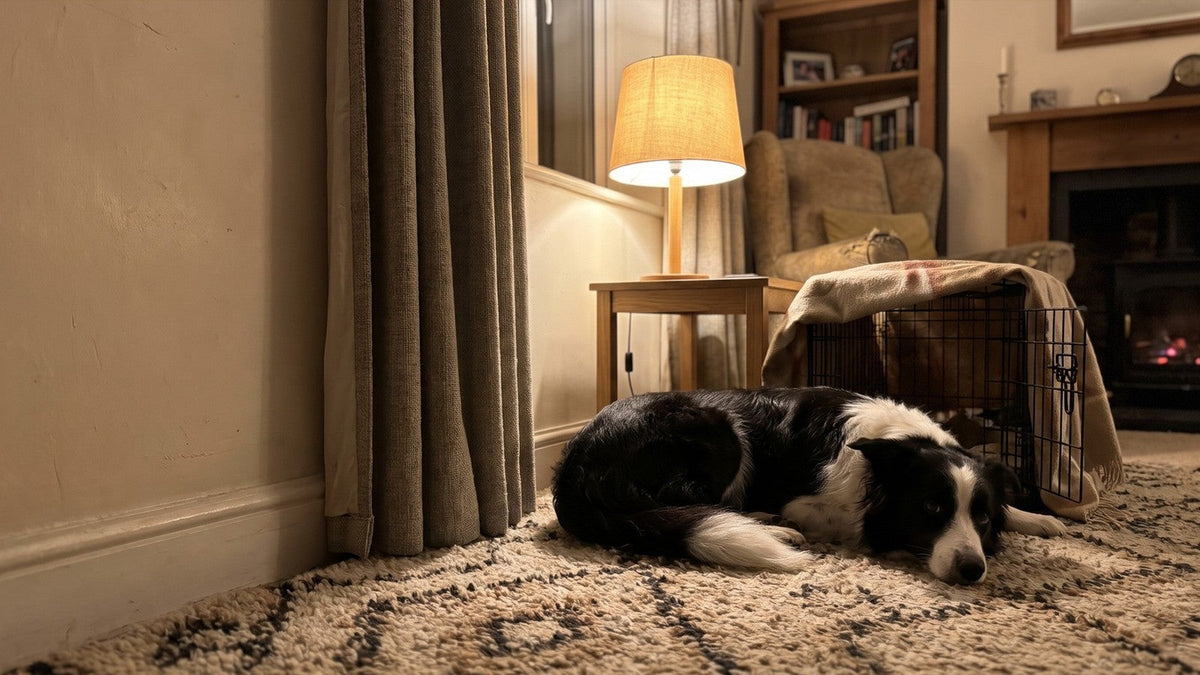
- Make a den. A crate or corner covered with a blanket, with their bed, a favourite toy and water. Let them choose where to hide and never pull them out.
- Add background noise. TV, radio or calm music at a normal volume helps soften the bangs.
- Give them a job. A lick mat (try our frozen lick mat recipe), a stuffed chew or a sniffing game gives a calming focus.
- Stay calm and stay close. Comfort them if they come to you. Keep your voice low and your routine normal.
- Check their ID. Make sure their microchip details are up to date and their collar tag has your number on it.

Before bonfire night: start early
The dogs who cope best are the ones whose owners started preparing early.
- Check the dates. Look up local displays and note the big nights: the weekends around 5 November, Diwali and New Year's Eve.
- Build the den now so it is already a safe, familiar place when the noise starts.
- Try sound work. Playing firework sounds very quietly while your dog eats or plays, then slowly turning it up over days, helps some dogs. Stop if they show any worry.
- Start daily calming support. Calming supplements work best as part of a routine, not as a one off on the night. See when to start calming treats above.
- Talk to your vet if your dog's fear is severe. Some dogs need more help than home steps can give, and that is nothing to feel bad about.
Help them through firework season
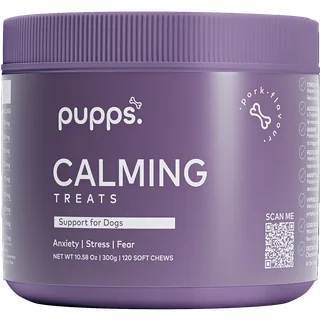
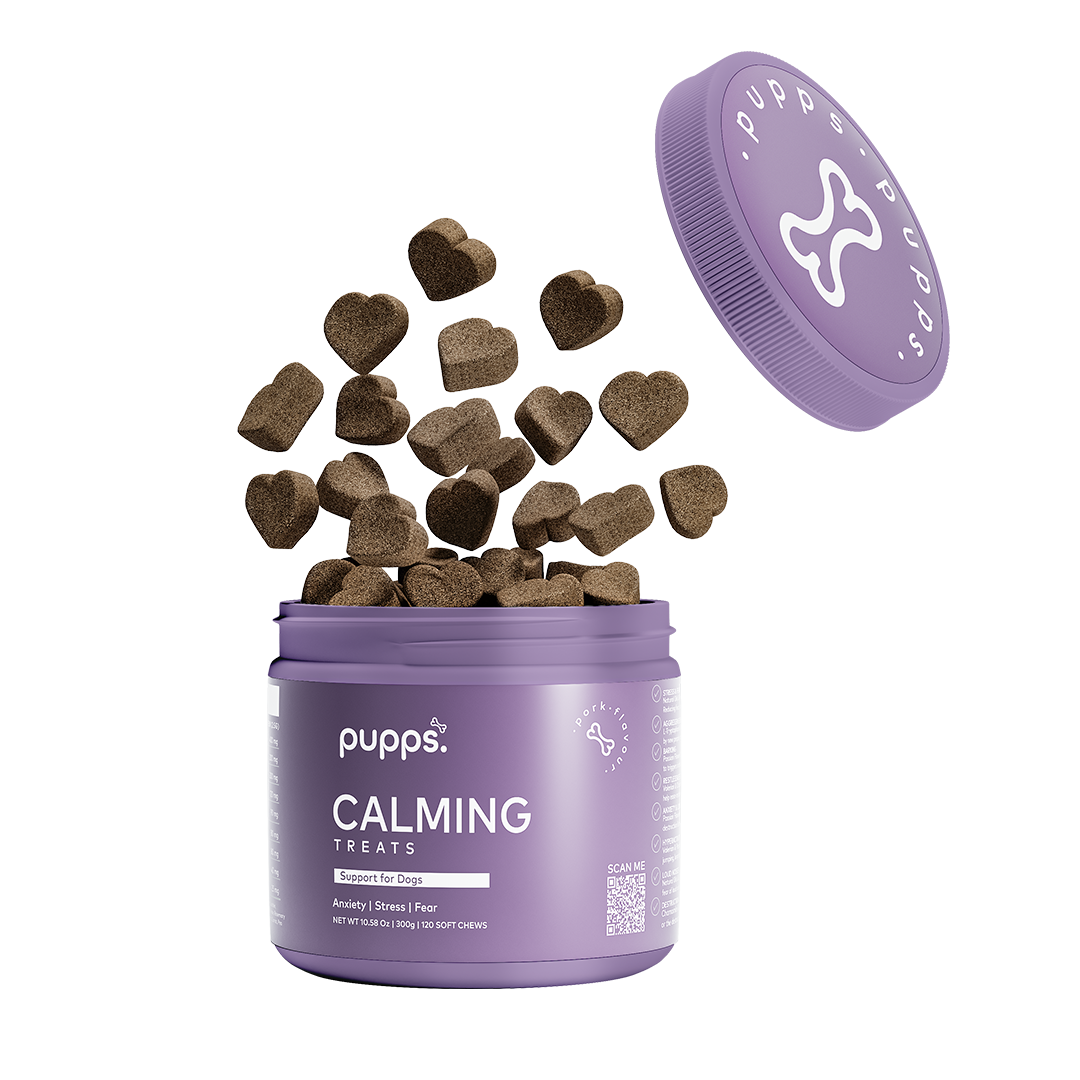
Pupps Calming soft chews are made with chamomile, valerian, passion flower, L-theanine and hemp, in a treat dogs actually want to eat. Give them daily as part of their routine. Rated 4.6 on Trustpilot and backed by our Lifetime Money Back Guarantee.
During the fireworks
- Let them hide. If your dog wants to be under the bed or in the den, that is their way of coping.
- Comfort is fine. You can't make fear worse by comforting a frightened dog. Calm strokes and a quiet voice help many dogs.
- Don't tell them off for barking, pacing or accidents. They are scared, not naughty.
- Keep doors shut and be careful when visitors arrive or leave, as frightened dogs often bolt.
- Don't leave them alone on the biggest nights if you can avoid it.
- Never take them to a display, even if they seem fine on walks.

After the fireworks
Some dogs stay jumpy for a day or two. Keep walks on a lead, stick to quiet routes and keep the den available. If your dog seems more fearful each year, or the fear starts to spread to other noises, speak to your vet or a qualified behaviourist.
New Year's Eve
Everything above applies again, with one difference: the fireworks start late and peak at midnight. Plan a late toilet break before 11pm, keep the TV on through midnight, and have the den ready from early evening. If your dog struggled on bonfire night, keep their calming routine going through December.
Frequently asked questions
Should I comfort my dog during fireworks?
Yes. Comforting a frightened dog does not reward the fear. Stay calm, speak softly and let them come to you. Your own calm is one of the most reassuring things they have.
When can fireworks be set off in the UK?
Fireworks are not allowed between 11pm and 7am, except on bonfire night (until midnight) and on New Year's Eve, Diwali and Chinese New Year (until 1am). In practice, displays and garden fireworks run for days either side of 5 November.
When should I start calming treats before fireworks?
As early as you can. Pupps Calming soft chews are made to be given every day. Some owners notice a change quickly, but give them up to 30 days of daily use before you judge. If bonfire night is close, start today and keep going through to New Year's Eve.
Is it okay to take my dog to a fireworks display?
No. Even dogs that seem relaxed can panic at close range. Leave them at home in their den with someone they trust.
What if nothing seems to help?
Speak to your vet. Severe noise fear is common and there are more options they can talk you through. Combining vet advice with a calm home routine gives your dog the best chance.
For dogs who struggle to settle at night all year round, read why is my dog restless at night, and for dogs who hate being left, see our guide to separation anxiety in dogs.


Leave a comment
This site is protected by hCaptcha and the hCaptcha Privacy Policy and Terms of Service apply.