



If your dog is starting to slow down on walks, hesitate at stairs, or take longer to get up in the mornings, your first instinct might be to put it down to age. And age is certainly a factor. But there's another contributor that often goes unaddressed — one that's directly within your control — and that's body weight.
The relationship between a dog's weight and their joint health is significant, well-documented, and frequently underestimated. Even modest excess weight — just 10–15% above ideal — places substantially greater load on joints with every single step. Over months and years, that additional mechanical stress accelerates cartilage wear, increases inflammation, and can turn mild joint sensitivity into genuine, chronic pain.
The encouraging flip side is that weight management is one of the most powerful tools you have for protecting your dog's joints — and, for dogs already showing signs of joint issues, for meaningfully reducing discomfort. This guide covers what you need to know, how to assess your dog's condition honestly, and what you can do.
Why Weight Matters So Much for Joints
The mechanics are straightforward: joints bear load. The more load they bear, the faster the cartilage that cushions them wears down. For a dog carrying excess body weight, every step, jump, and turn multiplies that load across the hips, knees, elbows, and spine.
Research in canine health has consistently shown that dogs maintained at a lean body weight develop arthritis later in life, progress more slowly when they do develop it, and require less pain management than their heavier counterparts. One landmark study found that lean-fed dogs lived an average of nearly two years longer than those allowed to eat freely — and spent significantly fewer of their later years in pain.
Weight also affects inflammation systemically. Fat tissue isn't metabolically inert — it actively produces inflammatory compounds (adipokines) that circulate through the body and amplify the inflammatory processes already occurring in stressed joints. An overweight dog isn't just carrying mechanical load; they're running a higher baseline level of inflammation that makes joint problems worse and harder to manage.
How to Assess Your Dog's Body Condition
Most of us find it genuinely difficult to assess our own dog's weight objectively. We see them every day, we love them, and a dog that's been slightly overweight for a long time starts to look normal. A vet scale and an honest conversation at your next check-up is always the most accurate route — but there are reliable at-home checks you can do right now.
The rib test
Place both hands flat on your dog's ribcage and slide them gently back and forth. You should be able to feel individual ribs relatively easily — like running your fingers over the back of your knuckles — without pressing hard. If you have to press firmly to feel anything, your dog is likely carrying excess body fat. If ribs are prominently visible without touching, they may be underweight.
The waist check
Look down at your dog from above. Behind the ribs, you should see a visible narrowing — a waist. If the silhouette is straight or barrel-shaped from ribs to hips, excess weight is likely. From the side, the abdomen should tuck up slightly behind the chest — a flat or pendulous belly suggests excess fat coverage.
Body condition scoring
Vets use a standardised 1–9 or 1–5 body condition score (BCS). An ideal score is 4–5 on a 9-point scale. Scores of 6–7 represent mild to moderate overweight; 8–9 indicate obesity. Your vet can score your dog and give you a specific target.
Which Dogs Are Most at Risk?
Whilst any dog can become overweight, some are more prone to the combination of weight gain and joint problems:
Prone-to-weight breeds
Labradors, Golden Retrievers, Cocker Spaniels, Basset Hounds, Beagles, Pugs, and many other breeds have a genetic predisposition to weight gain. Labradors in particular carry a mutation in the POMC gene that affects their sensation of fullness — they genuinely never feel full in the same way other breeds do.
Large and giant breeds
German Shepherds, Rottweilers, Great Danes, and similar breeds are particularly vulnerable to the combination of excess weight and joint problems because their joints already bear greater baseline load. Hip and elbow dysplasia are common in these breeds, and even modest excess weight significantly worsens outcomes.
Middle-aged and senior dogs
Metabolism slows with age, energy expenditure reduces, and muscle mass naturally decreases. If feeding portions aren't adjusted as a dog ages, gradual weight gain is almost inevitable — and it's happening at precisely the time joint health deserves most protection.
Neutered dogs
Neutering reduces metabolic rate in most dogs. Research suggests neutered dogs may require 20–30% fewer calories to maintain the same body weight as intact dogs. Owners who don't adjust feeding portions after neutering commonly see weight gain in the following months.
Practical Steps to Manage Your Dog's Weight
Get an accurate baseline
Weigh your dog at the vet and establish a target weight. Most veterinary practices will allow you to use their scales between appointments. Weighing monthly and tracking progress keeps you honest and motivated.
Measure food portions precisely
Eyeballing portions is one of the most common contributors to gradual weight gain. Use a kitchen scale rather than a scoop — scoops are inconsistent, and most feeding guides already build in a slight margin above truly lean maintenance. If your dog is overweight, reduce daily food by 10–20% from their current intake and monitor for change over 4–6 weeks.
Account for treats
Treats are often invisible calories. If you're using treats for training or enrichment — which is great — factor them into your dog's daily intake by reducing their main meal portion accordingly. As a general rule, treats should make up no more than 10% of daily calorie intake.
Adjust exercise appropriately
For dogs with joint issues, the instinct is often to reduce exercise to reduce pain — but gentle, regular movement is actually beneficial for joint health. Controlled, low-impact exercise (swimming, gentle lead walks, short more-frequent walks rather than one long one) maintains muscle mass, lubricates joints through movement, and supports weight management without placing excessive stress on damaged cartilage. Avoid high-impact activities like jumping and rough play during flare-ups.
Supporting Joint Health Alongside Weight Management
Weight management directly addresses the mechanical and inflammatory load on joints — but targeted nutritional support can work alongside it to protect cartilage and moderate inflammation in dogs already showing signs of joint sensitivity.
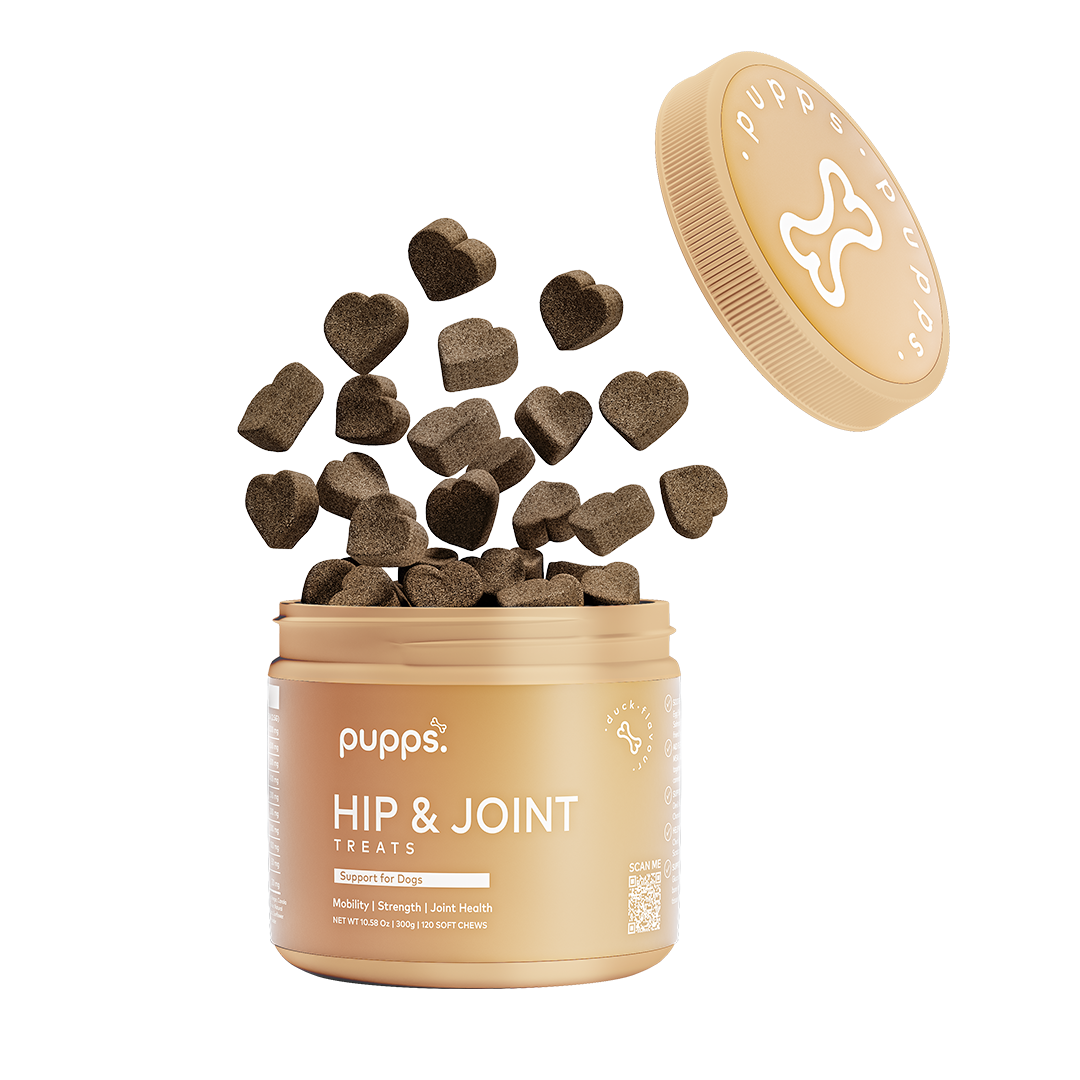
Pupps Hip & Joint Treats contain a combination of ingredients specifically chosen for joint health support: glucosamine and chondroitin provide the building blocks for cartilage repair and maintenance; MSM (methylsulfonylmethane) helps moderate the inflammatory processes associated with joint stress; green-lipped mussel provides a natural source of omega-3 fatty acids and glycosaminoglycans; and turmeric contributes curcumin, one of the most studied natural anti-inflammatory compounds in veterinary nutrition.
For dogs who are overweight with early joint sensitivity, combining a structured weight reduction plan with daily joint supplement support addresses both the cause (excess load and inflammation) and the symptom (joint discomfort) simultaneously. Most owners see the clearest results at the 8–12 week mark of consistent use alongside meaningful weight reduction.
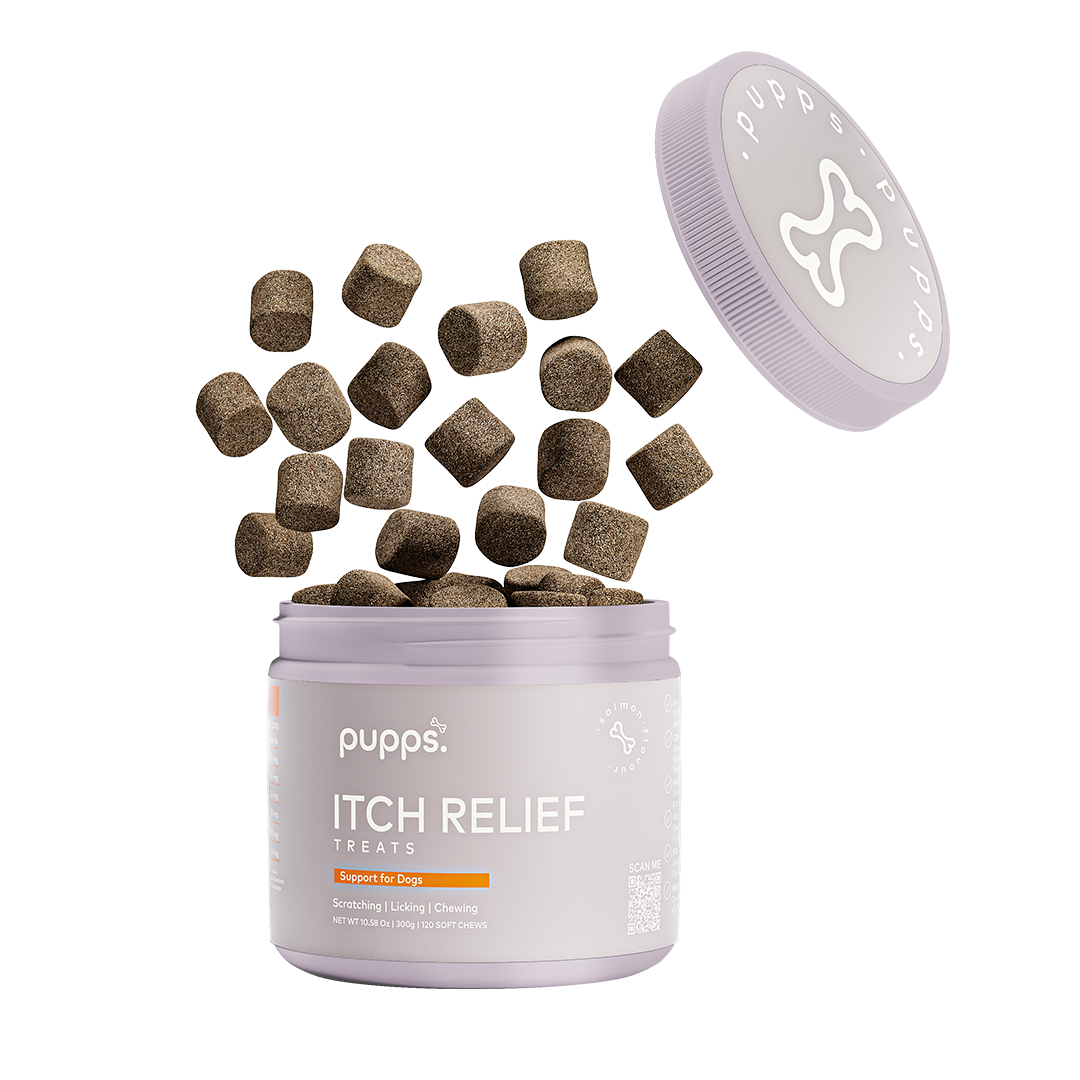
It's also worth noting that gut health plays a role in systemic inflammation. Pupps Pre & Probiotic Treats support a balanced gut microbiome, which helps regulate the body's inflammatory response more broadly — a useful foundation for any dog whose joint health is a priority.
When to Involve Your Vet
If your dog is significantly overweight (BCS 7 or above), is showing signs of pain, or has a diagnosed joint condition, please involve your vet in any weight management plan. They can rule out underlying causes of weight gain (hypothyroidism, for instance, is relatively common in dogs), recommend a calorie-controlled prescription diet if needed, and help you set a safe rate of weight loss.
Rapid weight loss is not the goal — and can cause its own problems, including muscle loss. A safe rate of weight loss for most dogs is 1–2% of body weight per week, which is gradual enough to preserve muscle mass whilst losing fat.
The Long Game
Joint health in dogs is something you're either investing in or drawing down on, every single day. Weight management is the investment that pays the most consistent returns — reducing mechanical stress, lowering systemic inflammation, and giving your dog a better chance of staying mobile and comfortable well into their senior years.
Combined with targeted nutritional support and appropriate exercise, it's one of the most meaningful things you can do for your dog's quality of life. The rewards — a dog who gets up easily, walks comfortably, and has years of good mobility ahead — are well worth the effort.
For more information on supporting your dog's joint health and overall wellbeing, visit pupps.com.


Leave a comment
This site is protected by hCaptcha and the hCaptcha Privacy Policy and Terms of Service apply.