

Bringing a puppy home is one of life's genuinely wonderful things. It's also, as most new owners quickly discover, a period of relentless decision-making. Food choices, feeding schedules, treats, training, socialisation — and underneath all of it, the quietly pressing question: am I giving this dog the best possible start?
Nutrition is foundational. The first twelve months of a dog's life are when their gut microbiome is established, their immune system is trained, their bones and muscles develop, and their brain and nervous system mature. What they eat, absorb, and assimilate during this window has implications that echo across their entire lifespan.
This guide is designed to cut through the noise and focus on what puppy nutrition actually means in practice — what they need, why they need it, and how to ensure they're getting it consistently.
The Nutritional Demands of a Growing Puppy
Puppies have fundamentally different nutritional needs to adult dogs, and the gap is larger than many owners expect. A puppy's energy requirements per kilogram of body weight are roughly twice those of an adult dog. Their protein needs are higher, their demand for certain minerals is significantly greater, and their gut is simultaneously more sensitive and more formative.
This isn't a reason to overthink every meal — a complete, high-quality puppy food handles the basics — but it is a reason to understand what's happening nutritionally so you can fill any gaps intelligently.
Gut Health: The Foundation of Everything Else
The single most important nutritional priority for a young puppy — one that's often overlooked — is gut health. Here's why it matters so profoundly: approximately 70% of a dog's immune system resides in the gut. A healthy, diverse gut microbiome isn't just about comfortable digestion; it's the scaffolding for immune function, brain development, skin health, and the ability to absorb nutrients effectively in the first place.
When puppies are born, their gut microbiome is essentially a blank slate. It's populated through birth, early feeding, and environmental exposure — which is why diet choices in the early months have such a lasting effect. A well-established microbiome provides protection against pathogenic bacteria, supports inflammatory regulation, and creates the conditions for healthy development across multiple systems.
Signs of a developing gut
It's entirely normal for puppies to have slightly irregular digestion in their early weeks at home — the stress of rehoming, new food, new environment, and new routines all affect the gut. What you want to see settle, over a period of 1–3 weeks, is:
- Formed, consistent stools (not rock hard, not loose)
- Comfortable digestion without obvious straining or gas
- Good appetite and energy after meals
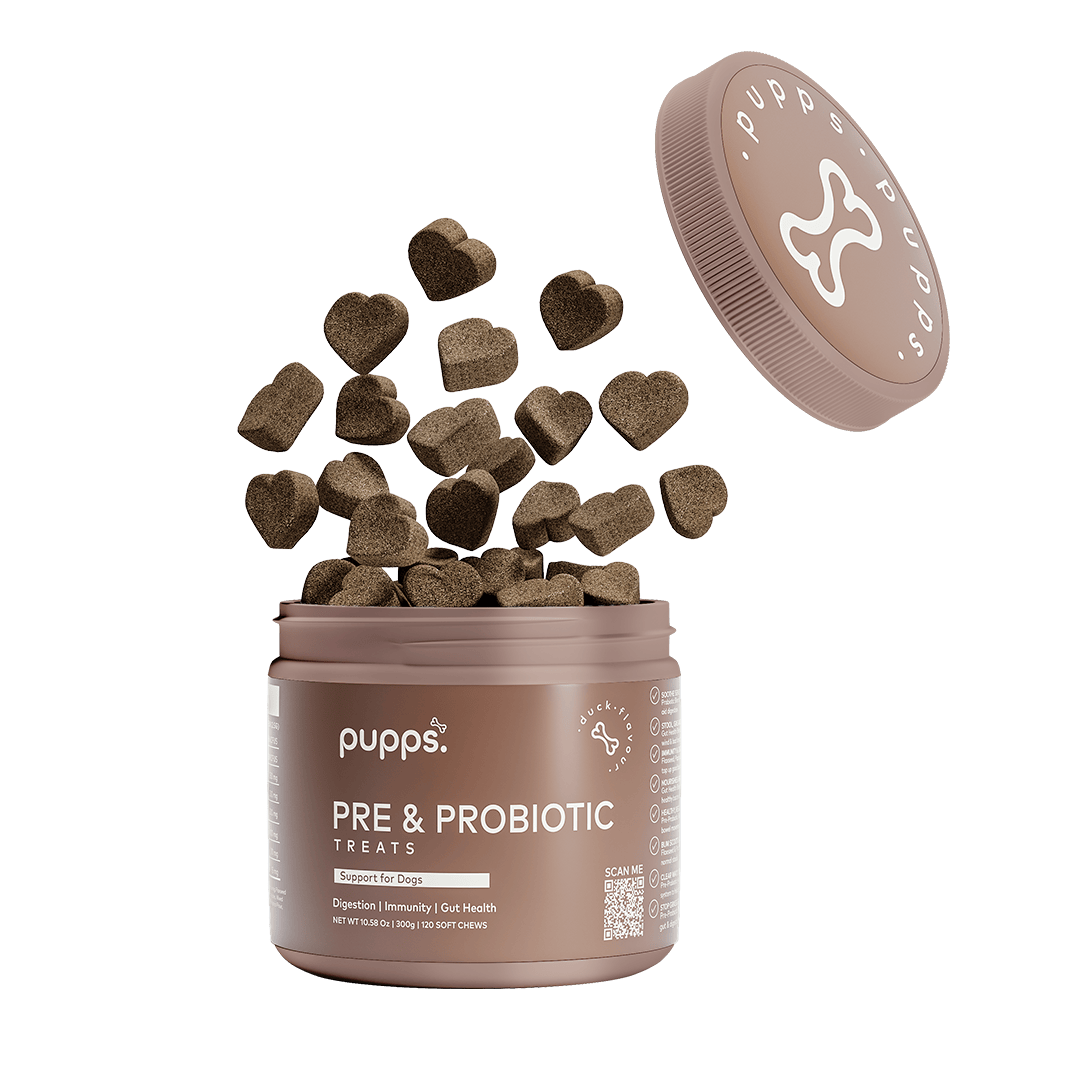
Supporting gut health during this transition period is one of the most valuable things you can do. Pupps Pre & Probiotic Treats contain a 5-strain probiotic blend with 4.5 billion CFUs alongside prebiotic fibre and digestive enzymes — designed to support healthy gut flora from the ground up. Starting these in the first few weeks at home helps establish a strong microbial foundation during the period when the microbiome is most responsive to positive intervention.
Essential Vitamins and Minerals in the First Year
A complete puppy food should cover the core vitamin and mineral requirements — but gaps can occur, particularly for fussy eaters, puppies on home-prepared meals, or those recovering from illness or stress. Understanding which nutrients matter most helps you spot potential deficiencies early.
Vitamin D
Critical for calcium and phosphorus absorption, bone development, and immune function. UK puppies — especially those with limited outdoor exposure during the darker months — may not get enough through diet alone. Look for this in any puppy multivitamin formula.
B vitamins
The B-vitamin complex plays a central role in energy metabolism, neurological development, and red blood cell production. Deficiencies can show up as poor energy, dull coat, and in some cases digestive issues.
Vitamin E and antioxidants
Antioxidants support immune development in young animals, helping the immune system learn to distinguish between threats and non-threats. This matters particularly for breeds prone to autoimmune or allergy-related issues.
Zinc
Zinc is involved in over 300 enzymatic processes in the body and is particularly important for skin barrier integrity, immune function, and wound healing. Some breeds (particularly Nordic breeds) have a genetic predisposition to zinc deficiency.
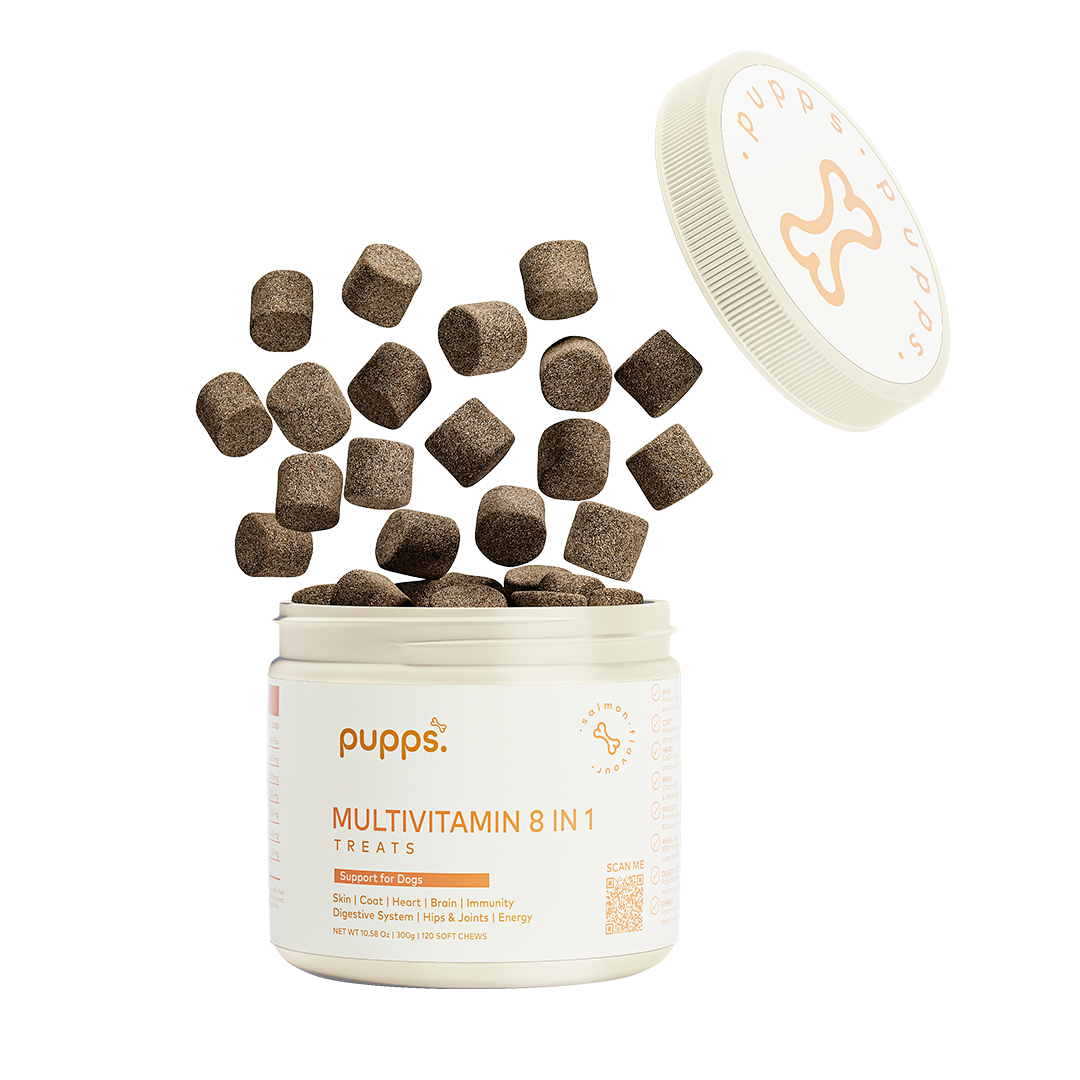
For puppies who are picky eaters, transitioning between foods, or recovering from a health setback, Pupps Multivitamin Treats provide a comprehensive daily top-up covering the essential vitamins, minerals, and antioxidants that support healthy development at every stage of the first year.
Protein: How Much, and What Kind
Protein is the building block of muscle, tissue, enzymes, hormones, and immune antibodies. Growing puppies need it in abundance. Look for a puppy food that lists a named animal protein (chicken, salmon, beef, lamb) as the primary ingredient — not a generalised 'meat meal' or cereal as the first item.
Amino acid profile matters as much as total protein content. L-Tryptophan, for example, is a precursor to serotonin — relevant not just for mood but for sleep and gut function. Puppies eating protein-rich, varied diets tend to have calmer temperaments, more stable energy, and better sleep than those on lower-quality diets.
Omega Fatty Acids: Brain, Skin, and Immune Development
Omega-3 fatty acids — particularly DHA — are critical for brain and eye development in puppies. DHA is the structural fat of the brain and retinal cells, and adequate levels during the developmental window support cognitive development, trainability, and nervous system maturation.
Omega fatty acids also support skin barrier development and help regulate the immune system's inflammatory responses — which matters particularly for breeds with a genetic predisposition to atopic dermatitis or allergies. If your puppy is showing early signs of skin sensitivity, starting targeted support early is worthwhile.
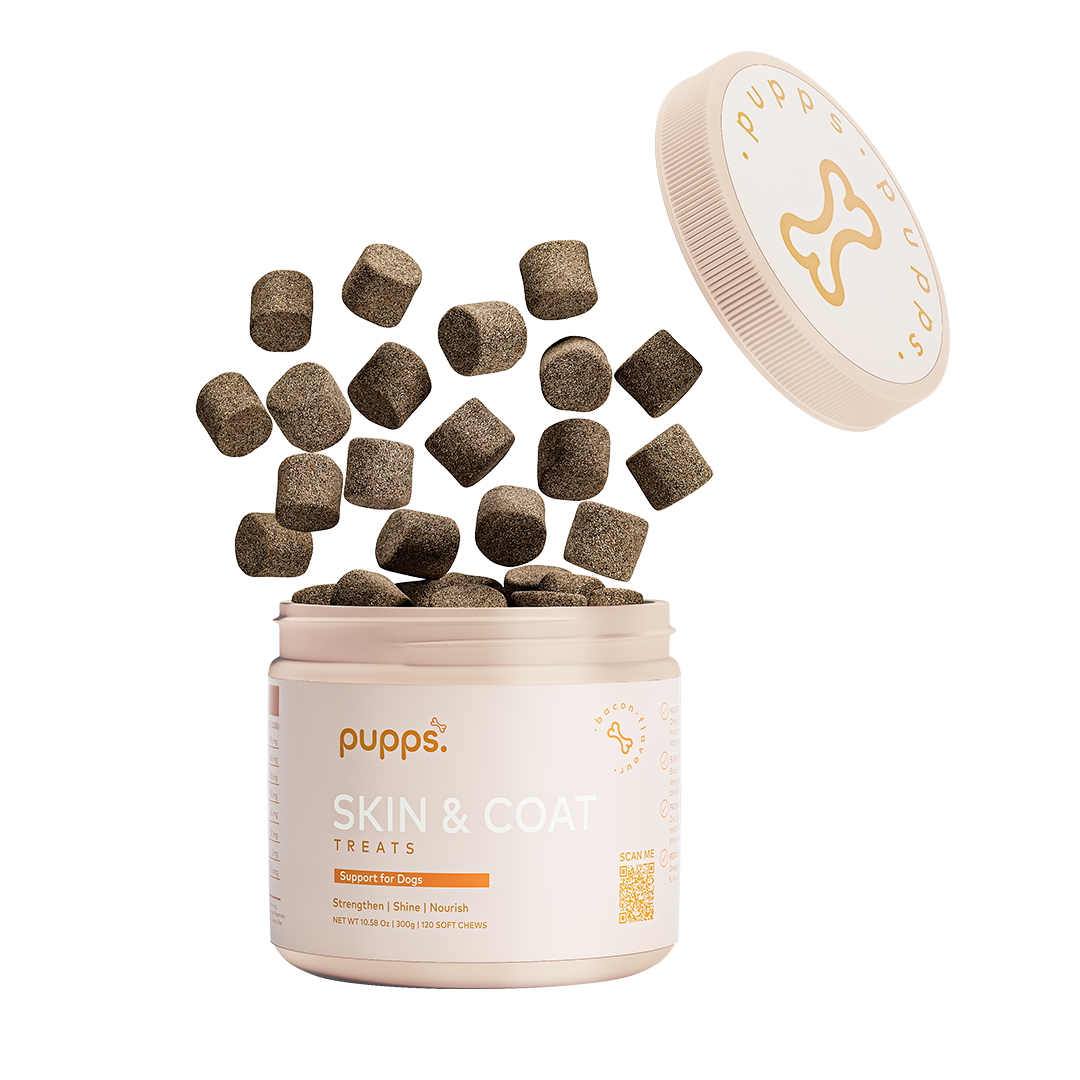
Pupps Skin & Coat Treats provide omega-3 and omega-6 fatty acids alongside biotin and vitamin E — a combination that supports skin barrier development during the formative period when the skin's defences are still maturing.
What About Calcium and Phosphorus?
Calcium and phosphorus are the minerals most associated with bone development, and the ratio between them matters as much as absolute amounts. An imbalanced ratio — from over-supplementation, or from supplementing calcium on top of a complete food — can actually cause skeletal problems rather than preventing them.
This is an important point: do not supplement calcium independently in puppies unless specifically directed by a vet. Complete puppy foods are formulated with the correct ratio. The supplements to consider for puppies are those that fill gaps — probiotics, multivitamins, omega fatty acids — not calcium.
Feeding Frequency and Portion Size
Puppies need feeding more frequently than adult dogs, as their smaller stomachs and faster metabolism mean they can't sustain energy from a once-daily meal.
- 8–16 weeks: 4 meals per day
- 4–6 months: 3 meals per day
- 6 months onwards: Transition to 2 meals per day
Follow the guidance on your puppy's specific food for portion sizes — and adjust based on your puppy's body condition. You should be able to feel ribs without pressing hard, and see a mild waist when viewed from above. Overfeeding in puppyhood is associated with accelerated growth in large breeds, which increases the risk of joint problems later.
When to Talk to Your Vet About Nutrition
While the principles above apply broadly, individual puppies vary. If your puppy is:
- Consistently refusing food or dramatically underweight
- Showing signs of digestive issues that don't resolve within 2–3 weeks
- Developing skin problems, excessive scratching, or unexplained fur loss
- Lethargic or showing poor growth compared to breed norms
...these warrant a vet conversation rather than a supplement adjustment. Supplements support health; they don't replace veterinary care when something is genuinely wrong.
Building the Foundation
The first year is an opportunity you only get once. The habits established in puppy nutrition — high-quality protein, a supported gut microbiome, consistent vitamin and mineral intake, omega fatty acids — create a biological foundation that influences health for years to come.
The good news is that getting this right doesn't require anything complicated. A high-quality, complete puppy food, a daily probiotic supplement during the establishment phase, a multivitamin for comprehensive nutritional coverage, and attention to early signs of skin or digestive sensitivity is genuinely enough to give most puppies an excellent start.
For more on supporting your dog's health at every life stage, visit pupps.com — and explore our range of supplements formulated specifically for dogs' nutritional needs at each stage of their life.



Leave a comment
This site is protected by hCaptcha and the hCaptcha Privacy Policy and Terms of Service apply.