




Few things are more distressing for a dog owner than watching their beloved companion struggle with anxiety. Whether it's a dog who barks frantically every time you put your coat on, one who trembles during every thunderstorm, or one who simply never seems to settle no matter what you do — anxiety in dogs is both more common and more varied than most people realise.
In fact, dog anxiety is one of the most searched topics amongst UK dog owners, and it's not hard to see why. The signs can be subtle at first and easy to misread. Many dogs show anxiety in ways that look more like "naughty behaviour" than emotional distress — destructive chewing, house training accidents, excessive barking. Misunderstanding what's driving those behaviours makes them much harder to address.
In this guide, we're going to explore the different forms dog anxiety takes, help you recognise the signs, understand the most common triggers, and — most importantly — walk you through what you can actually do to help your dog feel more settled and secure.
Understanding Dog Anxiety: More Than Just Nerves
Anxiety in dogs is a genuine emotional and physiological state, not a character flaw or a result of "bad training." When a dog is anxious, their nervous system is activated — stress hormones flood the body, heart rate increases, and the dog enters a state of heightened alertness that's genuinely uncomfortable for them. Over time, chronic anxiety can affect a dog's physical health as well as their emotional wellbeing, with evidence linking it to digestive problems, immune function, and even long-term behavioural changes.
Dogs are hardwired to look to their social group for safety signals. In modern domestic life, that social group is their human family. When those safety signals are absent — either because the family is away, or because the environment feels threatening — an anxious dog simply can't regulate themselves back to calm without support.
Anxiety exists on a spectrum. Some dogs experience mild unease in specific situations. Others have severe, chronic anxiety that affects their quality of life significantly. Most dogs fall somewhere in between — and with the right approach, most can be meaningfully helped.
The Most Common Types of Dog Anxiety
Separation Anxiety
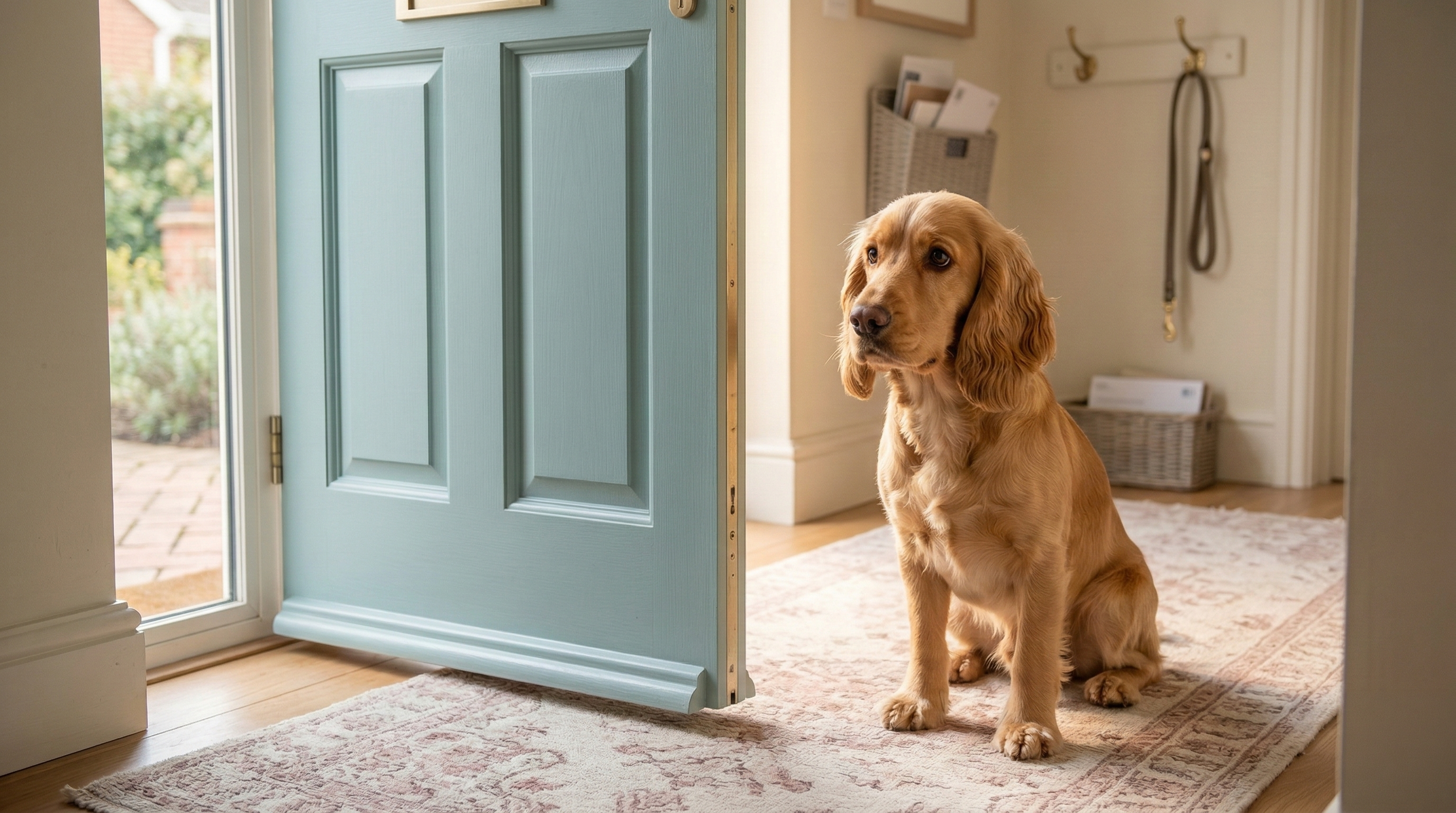
Separation anxiety is probably the most widely recognised form, and one of the most common. Dogs with separation anxiety struggle to cope when left alone — even for short periods. Signs typically include barking or howling shortly after you leave, destructive behaviour (particularly near exits like doors and windows), house training accidents despite being reliably trained, and visible distress when you prepare to leave (pacing, panting, following you from room to room).
Separation anxiety became significantly more widespread following the Covid lockdowns in the UK, as millions of dogs grew up with constant human company and then found themselves suddenly alone when owners returned to work. It's a very understandable response to a genuinely distressing change in circumstances.
Noise Anxiety
Fireworks, thunderstorms, construction work, traffic — noise anxiety is extremely common in dogs, particularly as they have hearing ranges far broader than ours. A dog who seems completely fine during the day may become inconsolable the moment a distant firework goes off. Signs include hiding, trembling, panting, pacing and attempting to escape.
Social Anxiety
Some dogs are anxious around unfamiliar people, other dogs, or busy environments. This can be rooted in limited early socialisation, a past negative experience, or simply a naturally more sensitive temperament. Social anxiety often looks like reactivity or aggression, which is why it's so frequently misinterpreted.
Generalised Anxiety
Some dogs seem anxious almost all the time — they're hypervigilant, struggle to settle, and react strongly to minor changes in their environment. Generalised anxiety can have both genetic and environmental components, and tends to benefit most from a consistent, holistic management approach.
Recognising the Signs of Anxiety in Your Dog
One of the challenges with canine anxiety is that the signs are often subtle — and not all of them look like what we'd call "anxious behaviour." Here's a more complete picture:
Obvious signs:
- Trembling or shaking
- Excessive panting (when not hot)
- Barking, whining or howling
- Attempting to escape or hide
- Destructive behaviour
- House training accidents
Subtler signs you might miss:
- Excessive yawning (a calming signal that indicates stress)
- Lip licking when not near food
- Whale eye (showing the whites of the eyes)
- Tail tucked or lowered
- Refusing food in situations where they'd normally eat
- Inability to settle — lying down, getting up, lying down again repeatedly
- Hyperattachment — following you from room to room, unable to rest unless you're in sight
- Digestive issues (loose stools, reduced appetite) during stressful periods
If you recognise several of these in your dog, it's worth taking anxiety seriously as a factor in their overall wellbeing.
What Actually Helps: A Practical Anxiety Management Guide
Managing dog anxiety well usually requires a combination of approaches. There's rarely a single magic solution — but consistently applying several strategies together tends to produce real results.
Build Predictability Into Your Dog's Day
Anxious dogs thrive on predictability. A consistent daily routine — similar wake-up times, walk times, feed times — gives your dog a framework they can rely on. Knowing what's coming next reduces the vigilance that anxious dogs maintain when everything feels unpredictable. This is one of the simplest and most effective things you can do.
Practise Gradual Desensitisation for Separation Anxiety
If your dog has separation anxiety, gradual desensitisation is the most evidence-based approach available. This involves getting your dog comfortable with the early signs of departure (putting on your shoes, picking up your keys) without actually leaving, then building up their ability to cope with increasingly longer absences over time. It takes patience and consistency, but it works. A qualified canine behaviourist can guide you through a structured programme if needed.
Create a Safe Space
Most anxious dogs benefit from having a specific place they associate with safety and calm — a covered crate, a corner with their bed and a favourite toy, or a quiet room. Importantly, this should be their choice to retreat to, not somewhere they're forced. Once established, a safe space becomes a powerful resource that dogs can use to self-regulate during stressful moments.
Manage the Physical Environment
During known stressors like fireworks, pull the curtains, put the TV or radio on to mask sudden noises, and ensure your dog has access to their safe space. For dogs with sound sensitivity, there are specific products designed to muffle noise, and playing specially composed calming music for dogs has good evidence behind it.
Consider Nutritional Support
Certain natural ingredients have a well-established role in supporting nervous system function and emotional regulation in dogs. Ashwagandha, valerian, chamomile and L-theanine are among the most studied for their calming properties. They don't sedate — instead, they help take the edge off the nervous system's reactivity, making it easier for your dog to settle and respond to calming signals.
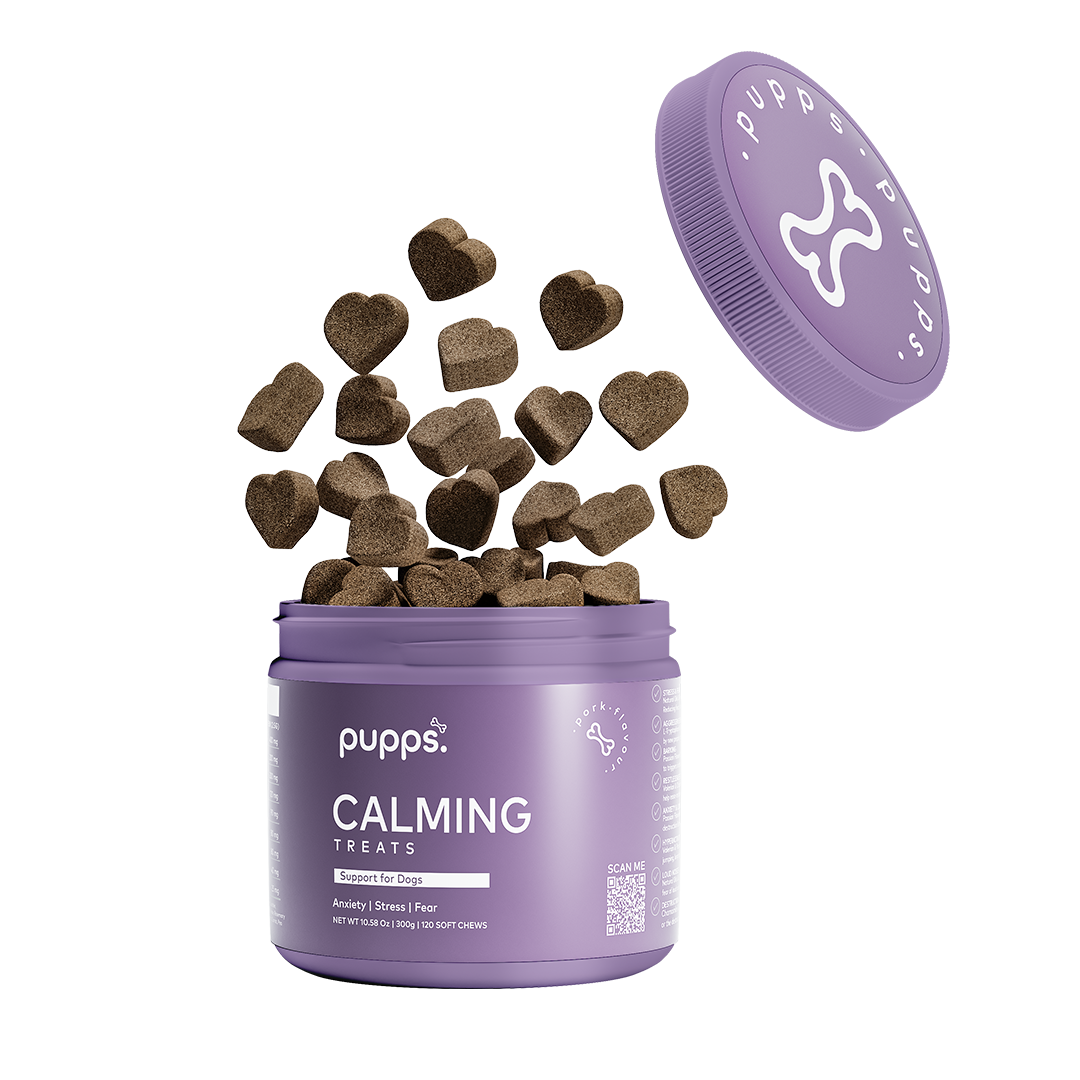
Pupps Calming Treats are formulated with these kinds of targeted, natural ingredients to provide daily nervous system support. For ongoing anxiety management, consistent daily use tends to be more effective than giving them only in the midst of a stressful moment — the goal is to build a steadier baseline of calm over time. Many owners find them particularly useful during consistently challenging seasons: fireworks season, summer thunderstorms, or during a household change like building work or a new baby.
Exercise and Mental Enrichment
Physical exercise is one of the most powerful natural tools for reducing anxiety — it burns off stress hormones and promotes the release of feel-good endorphins. But equally important, and often overlooked, is mental stimulation. A dog who is genuinely tired — mentally as well as physically — has far fewer resources available for anxiety. Puzzle feeders, scent work, and training games all provide this kind of productive mental exhaustion.
When to Seek Professional Help
Some anxiety is manageable with the strategies above. But for dogs with severe or complex anxiety — particularly those who are causing harm to themselves or others, or whose quality of life is significantly affected — professional help is important.
Your vet should always be the first port of call for severe anxiety, as they can rule out any underlying physical causes and, where appropriate, discuss whether short-term medication might help to create the "space" for behavioural work to be effective. They can also refer you to an accredited veterinary behaviourist or clinical animal behaviourist.
Nutritional support like Pupps Calming Treats can complement behavioural work and, in some cases, provide a helpful stepping stone. They're not a replacement for professional intervention in severe cases — but as part of a wider plan, they can make a real contribution.
The Anxious Dog Can Become a Calmer Dog
One of the most important things to know if you have an anxious dog is that anxiety isn't a fixed state. With the right support, most anxious dogs make genuine progress. The goal isn't to eliminate anxiety entirely — some responsiveness to the environment is healthy and normal — but to bring it down to a level that allows your dog to live a full, comfortable, joyful life.
That involves understanding what's driving your dog's anxiety, addressing it consistently across multiple areas, and giving your dog the tools — environmental, behavioural and nutritional — to regulate themselves more effectively. It takes time and patience. But the transformation in a dog who has gone from chronic anxiety to a more settled, confident state is one of the most rewarding things a dog owner can experience.
Related reading
- Why won't my dog settle in the evening
- Why is my dog restless at night
- Can dogs get burned out from overstimulation
- Separation anxiety in dogs
- Helping your dog through fireworks
Explore the full Pupps range to find the right nutritional support for your dog's specific health and wellbeing needs — because every dog deserves the chance to feel at their best.


Leave a comment
This site is protected by hCaptcha and the hCaptcha Privacy Policy and Terms of Service apply.