



There are few things more heart-wrenching than leaving for work and hearing your dog cry as you close the front door. Or coming home to a chewed sofa, upturned bin, or a note from a neighbour about the barking. If you recognise any of this, you're far from alone — separation anxiety is one of the most common behavioural challenges UK dog owners face.
And spring, oddly enough, tends to be when it flares up. After months of winter routines — more time at home, slower mornings, quieter days — the shift to busier spring schedules can catch dogs completely off guard. School runs kick back in after Easter breaks, commutes resume, and the calm of winter suddenly becomes a lot of time spent alone.
The good news is that separation anxiety is manageable. In this guide, we'll walk through exactly what it looks like, why it happens, and the practical steps you can take to genuinely help your dog feel calmer when you're not there.
What Is Separation Anxiety in Dogs?
Separation anxiety is a state of panic or intense distress that some dogs experience when left alone or separated from the people they're bonded to. It's important to distinguish it from boredom-related misbehaviour — a dog chewing a slipper because they're understimulated is different to a dog destroying a door frame in a state of genuine fear.
With true separation anxiety, the behaviour stems from an emotional response that the dog cannot control. They're not being naughty; they're overwhelmed. Understanding this distinction matters, because it shapes how you respond.
How to Tell If Your Dog Has Separation Anxiety
The signs of separation anxiety tend to cluster around departure and return. Here's what to look for:
Before you leave
- Following you from room to room as you get ready
- Trembling, panting, or pacing when they notice cues like picking up keys or putting on a coat
- Whining or vocalising before you've even left
- Attempts to block the door or prevent you from leaving
While you're away
- Prolonged barking, howling, or whining (often reported by neighbours)
- Destructive chewing — especially near exits like doors and windows
- House soiling despite being toilet trained
- Excessive drooling or salivation
- Attempting to escape the house or garden
- Repetitive pacing or circling
When you return
- Frenzied, over-the-top greeting even if you've only been gone 20 minutes
- Visible relief — flopping down, following you closely
- Immediate return to calm once you're present
If you're unsure whether your dog is truly anxious or just bored, consider setting up a pet camera or even leaving your phone recording. Watching footage of what actually happens when you leave is often the clearest indicator.
Why Do Some Dogs Develop Separation Anxiety?
There's rarely a single cause. Separation anxiety tends to develop from a combination of factors:
Genetics and breed
Certain breeds are more prone to separation anxiety by nature. Velcro breeds — those bred to work closely alongside humans, like Spaniels, Labradors, Vizslas, and Border Collies — tend to find alone time harder. That said, any dog can develop it regardless of breed.
Routine disruption
Dogs are creatures of habit. When routines change significantly — particularly moving from lots of time together (school holidays, remote working, winter) to long periods alone — anxiety can develop. This is why spring is a particularly common trigger in the UK, when post-Easter routines shift sharply.
A history of instability
Rescue dogs, dogs who have changed homes multiple times, or those who experienced early abandonment are statistically more likely to develop separation anxiety. They've learnt that people leaving can mean people not coming back.
Inadvertent reinforcement
It's a natural instinct to soothe an anxious dog before you leave — long goodbyes, lots of fussing, reassuring words. In practice, this can amplify the emotional significance of departure. Dogs pick up on the ritual and begin to anticipate distress before you've even moved.
A pandemic cohort
Dogs acquired during 2020–2021 who spent months with owners constantly at home before routines normalised showed significantly higher rates of separation-related behaviour. If your dog is in this age bracket, this may well be relevant.
Practical Strategies to Help Your Dog Cope
There's no quick fix for separation anxiety — it responds best to consistent, patient work over time. The following strategies are well-supported and worth implementing together rather than in isolation.
Gradual desensitisation
This is the gold standard approach. The idea is to systematically reduce the emotional significance of your departure through very gradual exposure. Start with micro-absences — leaving the room for 30 seconds, returning before any anxiety kicks in. Slowly extend the time over days and weeks. The goal is to build a history of you leaving and coming back, so the dog learns the pattern is safe.
It's painstaking but effective. Dogs with mild to moderate anxiety often respond well within weeks.
Disrupt departure rituals
If your dog starts showing signs of anxiety at the sight of your coat or keys, practise picking them up at random times throughout the day without leaving. This breaks the association. Make your actual departure as low-key as possible — no prolonged goodbyes, no emotional build-up.
Create a safe space
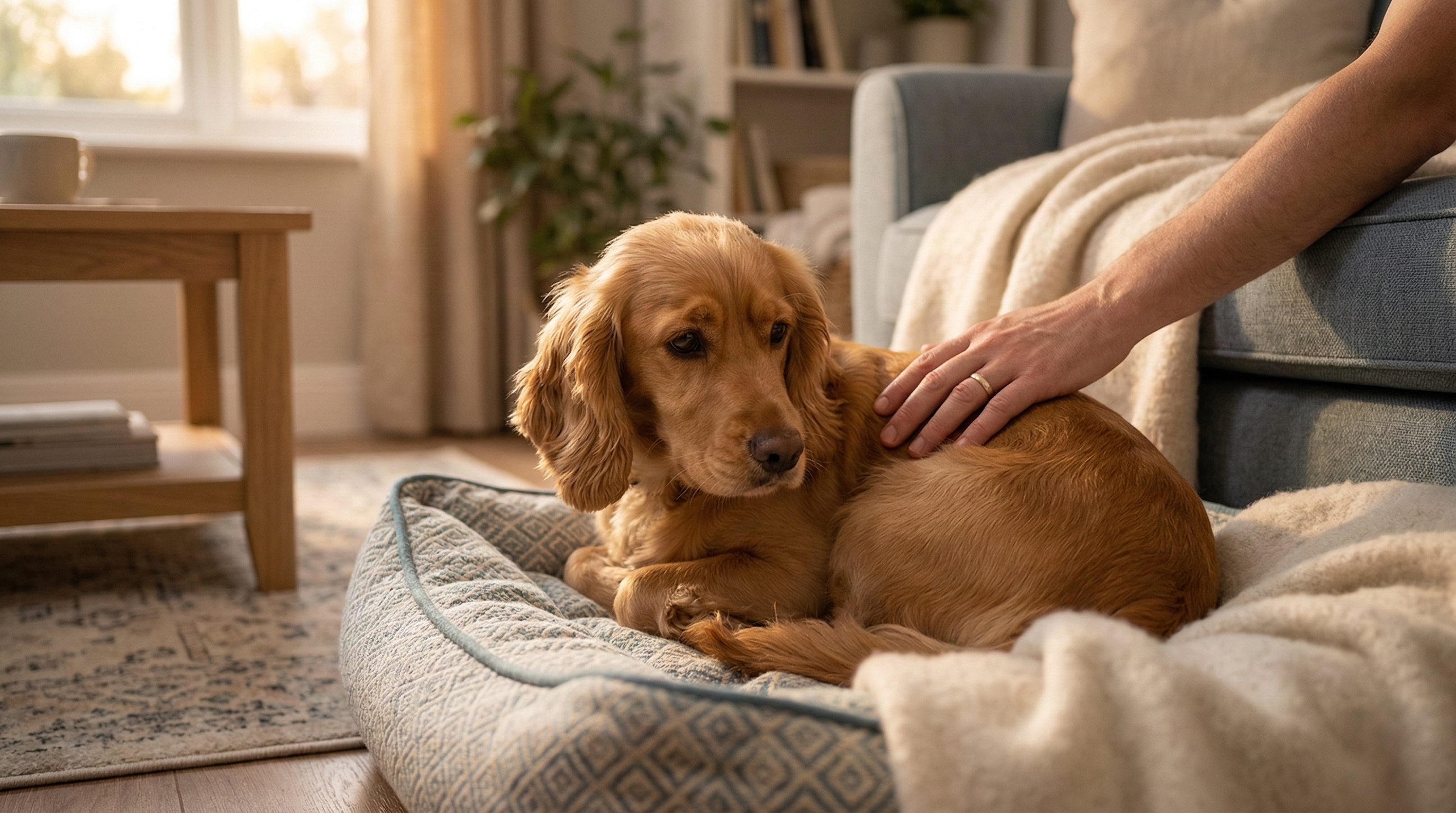
A designated area — a crate, a bed in a quiet room, or a specific corner of the house — can give anxious dogs a physical anchor. It should be introduced positively, never used as punishment, and associated with good things (treats, favourite toys, worn clothing that smells of you).
Environmental enrichment
A tired dog copes better. A decent walk or play session before a longer absence can take the edge off. Enrichment toys — snuffle mats, frozen Kongs, lick mats — give the brain something to focus on in the early, hardest part of being alone.
Consider calming support
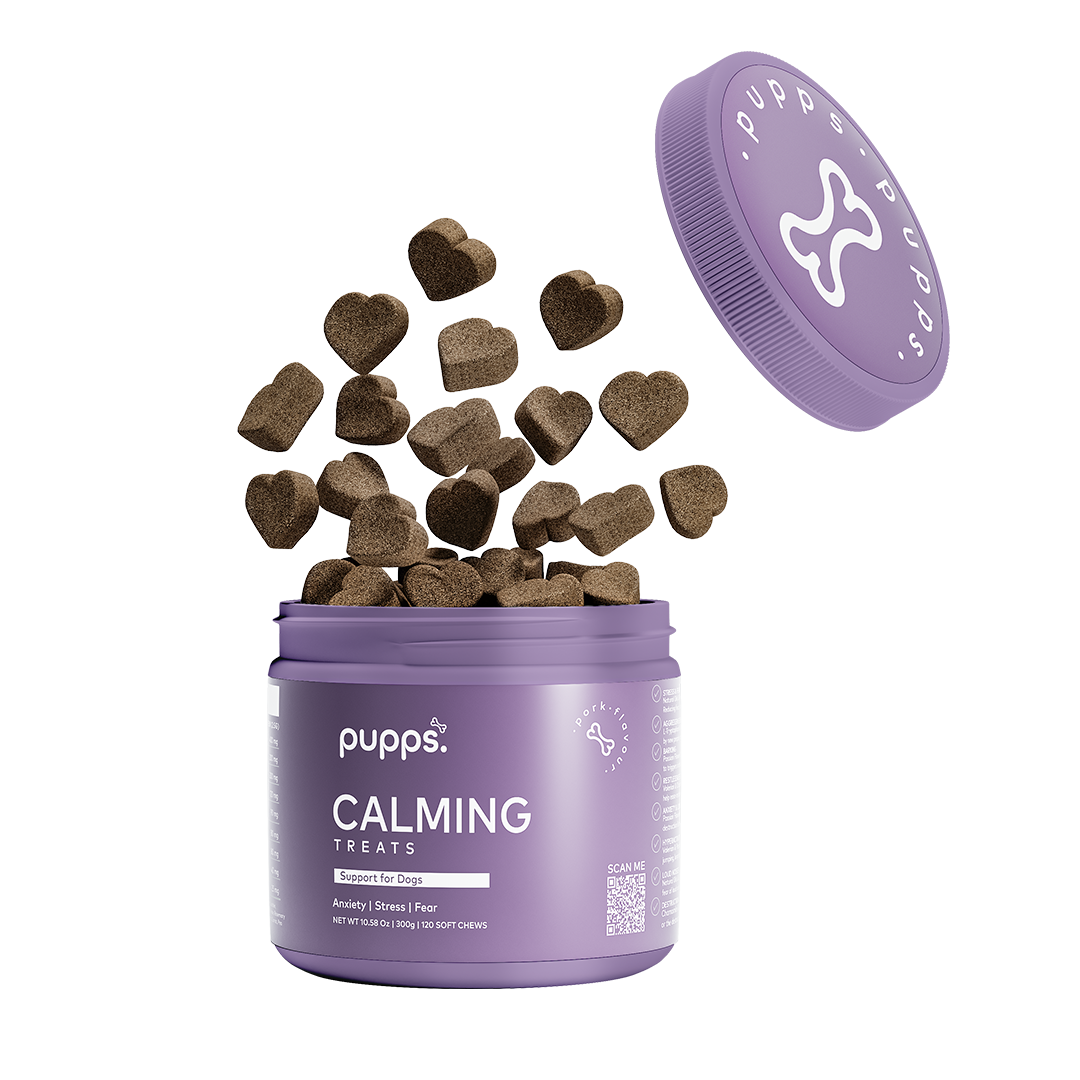
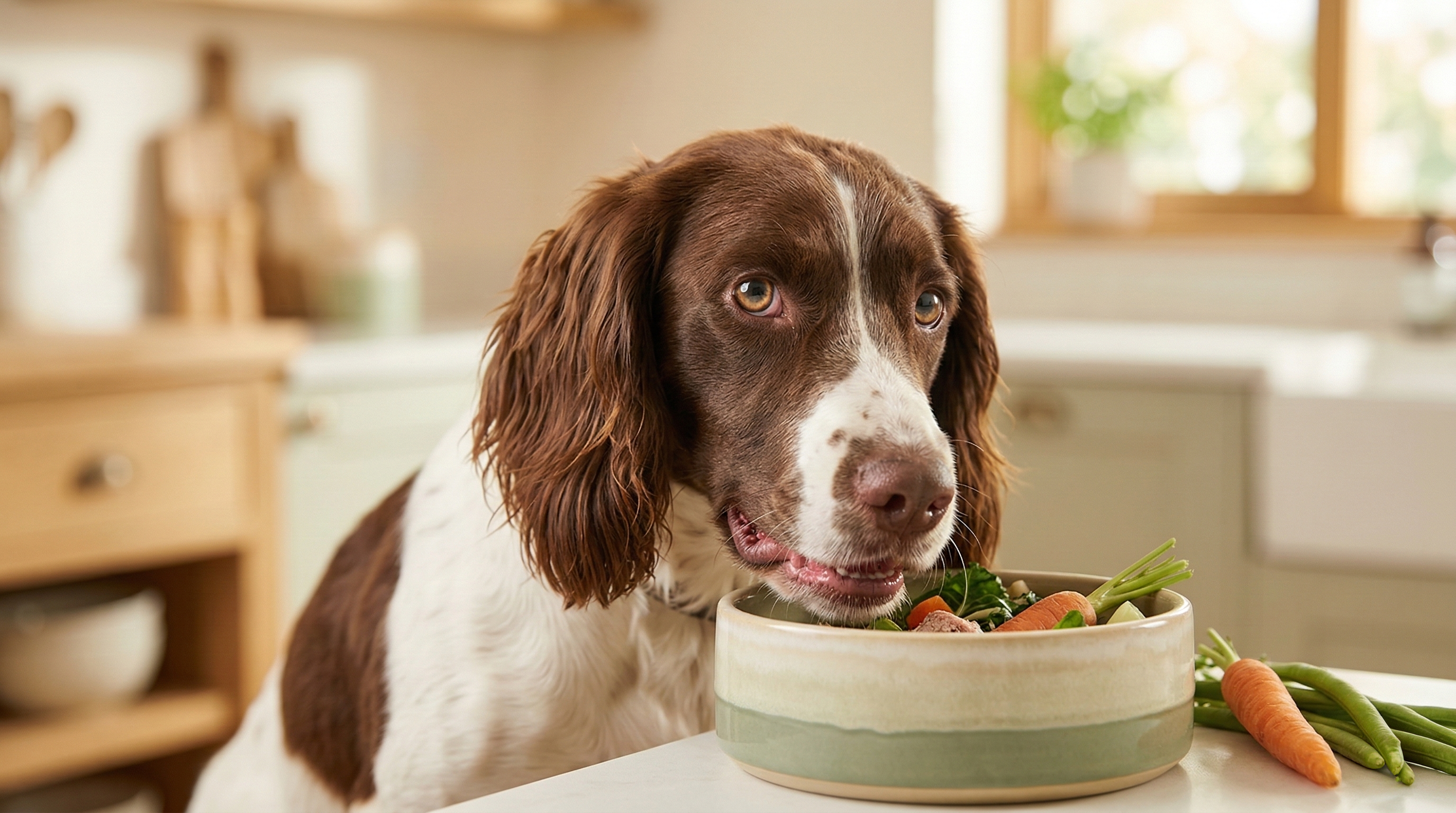
For dogs with persistent or moderate anxiety, natural calming supplements can play a useful supporting role alongside behavioural work. Pupps Calming Treats are formulated with ingredients specifically chosen to support a calmer state — including L-Tryptophan, which is a precursor to serotonin, L-Theanine for relaxed alertness, Valerian Root, Chamomile, and Passionflower.
These aren't sedatives — they don't make dogs drowsy or unresponsive. Instead, they support the nervous system's ability to regulate, helping your dog stay in a calmer baseline state where behavioural learning is more effective. Think of them as supporting the conditions for progress, rather than replacing the work itself.
Hemp Oil is another key ingredient in our Calming Treats, working alongside the other botanicals to support relaxation. Many owners find giving the treats around 30–45 minutes before a planned absence helps take the edge off, particularly in the early stages of desensitisation training.
When to seek professional help
If anxiety is severe — your dog is injuring themselves trying to escape, eliminating despite being trained, or showing signs of extreme distress — please consult your vet. In serious cases, medication alongside behavioural intervention may be appropriate, and a referral to a clinical animal behaviourist may be the most effective route. The Association of Pet Behaviour Counsellors (APBC) has a directory of accredited professionals across the UK.
What About When You Return?
How you handle reunions matters more than many owners realise. The natural response is a warm, enthusiastic greeting — which feels lovely but can reinforce the idea that your return is a huge event worth getting excited about.
Counterintuitively, calm and low-key reunions tend to work better for anxious dogs. Come in quietly, give your dog a moment to settle, and then greet them gently once they've calmed down. Over time, this helps normalise your return rather than making it the emotional peak of the day.
Can Separation Anxiety Be Cured?
For many dogs, yes — with consistent work, separation anxiety can be significantly reduced or resolved. For others, particularly those with deeply ingrained anxiety or a difficult history, it becomes something to manage rather than eliminate. Progress is rarely linear, and there will be setbacks. What matters is the overall trajectory.
The most important thing is to approach it with patience and without frustration. Your dog isn't choosing to be anxious. They're doing the best they can with the nervous system they have — and with the right support, that nervous system can learn to feel safer.
A Note on Spring Routine Changes
If you're reading this because you've noticed a change in your dog's behaviour as spring routines have shifted, the timing makes complete sense. The transition from winter — with its slower pace and more time at home — to the busyness of spring can be genuinely destabilising for dogs who've adjusted to having you around more.
If you can, try to manage the transition gradually. Even a few weeks of slowly reintroducing longer absences before a big routine change can make a meaningful difference. And if your dog already shows signs of anxiety, now is a good time to start the desensitisation process before summer holidays and further disruptions arrive.
For more general advice on supporting your dog's overall wellbeing through seasonal changes, visit pupps.com — and take a look at our full range of calming support supplements if anxiety is something your dog struggles with.
With consistency, the right support, and a little patience, most dogs can learn that being alone doesn't have to be scary.


Leave a comment
This site is protected by hCaptcha and the hCaptcha Privacy Policy and Terms of Service apply.