

If you've noticed your dog scratching more than usual as the days get longer and the blossom appears on the trees, you're far from alone. Every spring, thousands of UK dog owners find themselves searching for answers — and often, the culprit isn't fleas. It's the season itself.
Spring is one of the busiest times of year for seasonal allergies in dogs. As willow, elm, birch and alder trees come into full pollen release throughout March and April, sensitive dogs can start reacting almost overnight. What looked like a perfectly comfortable dog in February can transform into a scratching, licking, face-rubbing ball of irritation by mid-March.
In this guide, we'll walk you through exactly what's happening when your dog reacts to spring allergens, how to tell the difference between an allergy and something else, and — most importantly — what you can actually do to help your dog feel more comfortable throughout the season.
Why Spring Triggers Itching in So Many Dogs
Dogs can develop environmental allergies — also known as atopic dermatitis — just like humans can develop hay fever. But where humans tend to sneeze and get watery eyes, dogs express their allergies almost entirely through their skin. The result is itching, and plenty of it.
Unlike a flea allergy (which is triggered by a bite) or a food allergy (which is present year-round), a seasonal allergy follows the rhythms of the outdoor world. In the UK, the pollen season starts properly in March with tree pollens, before grass pollen takes over in late spring and summer. This staggered release means that for sensitive dogs, the irritation can feel like it goes on for months.
Here's what's actually happening inside your dog's body: when they encounter an allergen — whether inhaled or absorbed through their skin on a walk — their immune system identifies it as a threat and releases histamines and other inflammatory chemicals. These chemicals cause inflammation in the skin, which the dog experiences as an intense, persistent itch. It's not your dog being silly or dramatic. It's a real immune response that genuinely causes discomfort.
Common Signs of Seasonal Allergies in Dogs
Knowing what to look for is the first step. Seasonal allergies in dogs often look quite different from what people expect, and can sometimes be misread as other conditions entirely.
Look out for:
- Excessive paw licking — one of the most telltale signs. Dogs often lick and chew at their paws after walks when pollen has settled on the skin. You may notice reddish-brown staining on the fur between the toes.
- Face rubbing — dragging their face along the carpet or rubbing against furniture is your dog's way of trying to relieve itching around the muzzle, eyes and ears.
- Scratching at the belly, armpits and groin — these areas have thinner fur and more skin exposure, making them particularly vulnerable to allergens.
- Red or irritated skin — you may see pink or inflamed patches, especially on the underbelly, between the toes, or along the ear flaps.
- Recurring ear infections — chronic ear infections that flare seasonally are a classic (and often overlooked) sign of environmental allergies.
- Increased shedding or patchy coat — inflammation in the skin can disrupt the normal hair growth cycle.
If your dog's symptoms are noticeably worse after outdoor time, or if they ease in winter and return each spring, seasonal allergies are a very likely explanation.
Why UK Spring Is Particularly Challenging for Sensitive Dogs
Britain's damp climate and lush green landscape, whilst wonderful for walkies, creates ideal conditions for high pollen counts. The UK pollen season typically kicks off in earnest during March, with tree pollen from willow, elm, birch, poplar and alder reaching peak levels through spring.
Added to this, the unpredictable British weather can actually make things worse. Warm, breezy days send pollen counts soaring, and after a rainy spell, the sudden burst of dry, sunny weather can release stored pollen in large quantities. Dogs that walk in parks, fields or woodland during these conditions are getting a significant allergen exposure, even on a short twenty-minute walk.
Indoors isn't a refuge either. Dust mites — another common trigger for dogs with allergies — multiply in the warm, humid conditions that central heating creates. So whilst spring is particularly notable for pollen, a dog with environmental allergies may be dealing with multiple overlapping triggers at once.
What You Can Do to Help Your Itchy Dog This Spring
The good news is that there's quite a lot you can do at home to make a meaningful difference to your dog's comfort. It's rarely about a single solution — the most effective approach tends to combine several strategies.
Wipe down after walks
A simple but surprisingly effective habit: wipe your dog's paws, legs and belly with a damp cloth or pet-safe wipe after every outdoor walk during high pollen season. This removes surface pollen before your dog has a chance to lick it off or absorb it through the skin. Paying particular attention to the paws — where dogs do so much of their grooming — can make a noticeable difference.
Bathe more frequently
During peak allergy season, bathing your dog every one to two weeks (rather than the usual monthly routine) can help wash away accumulated allergens from the coat and skin. Use a gentle, dog-specific shampoo — ideally one formulated for sensitive skin. Avoid harsh shampoos that can strip the skin's natural oils and worsen the barrier function.
Monitor pollen forecasts
Just as you might check the weather before heading out, it's worth checking the pollen forecast during spring. On very high pollen days, consider walking your dog in the early morning or later in the evening when counts tend to be lower, and sticking to pavements rather than fields or parks with long grass.
Keep bedding clean
Wash your dog's bedding frequently in warm water to reduce dust mite populations and remove any pollen that may have been transferred from their coat. This is a simple change that significantly reduces the allergen load in your dog's immediate environment.
Support skin barrier function from the inside
This is where nutrition becomes genuinely important. A dog's skin acts as their first line of defence against allergens. When the skin barrier is healthy, fewer allergens are able to penetrate and trigger an immune response. Omega-3 fatty acids — particularly EPA and DHA from fish oil — are well-established for their role in supporting skin barrier integrity and moderating inflammatory responses. Quercetin, a natural bioflavonoid, also shows promise for modulating histamine responses in dogs.
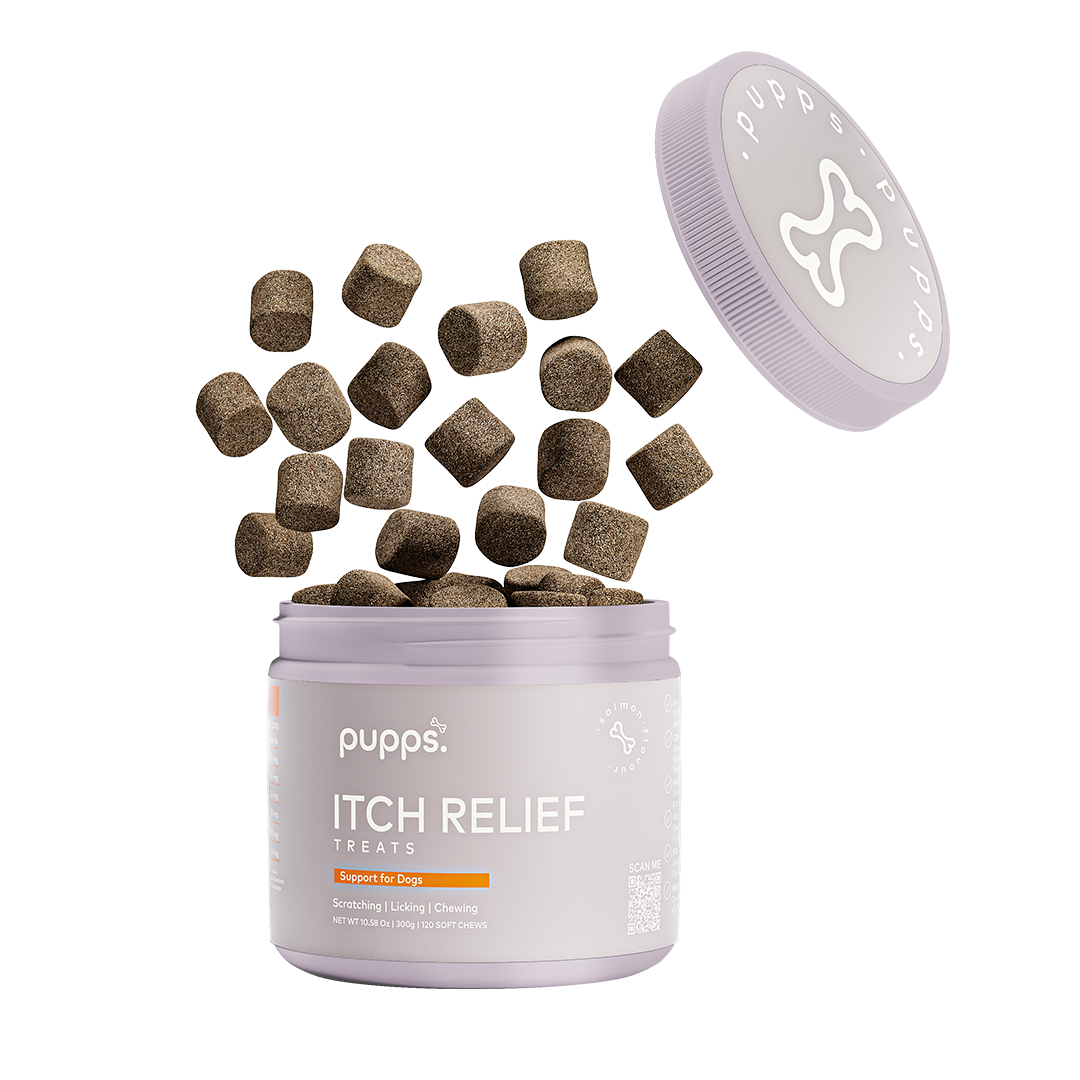
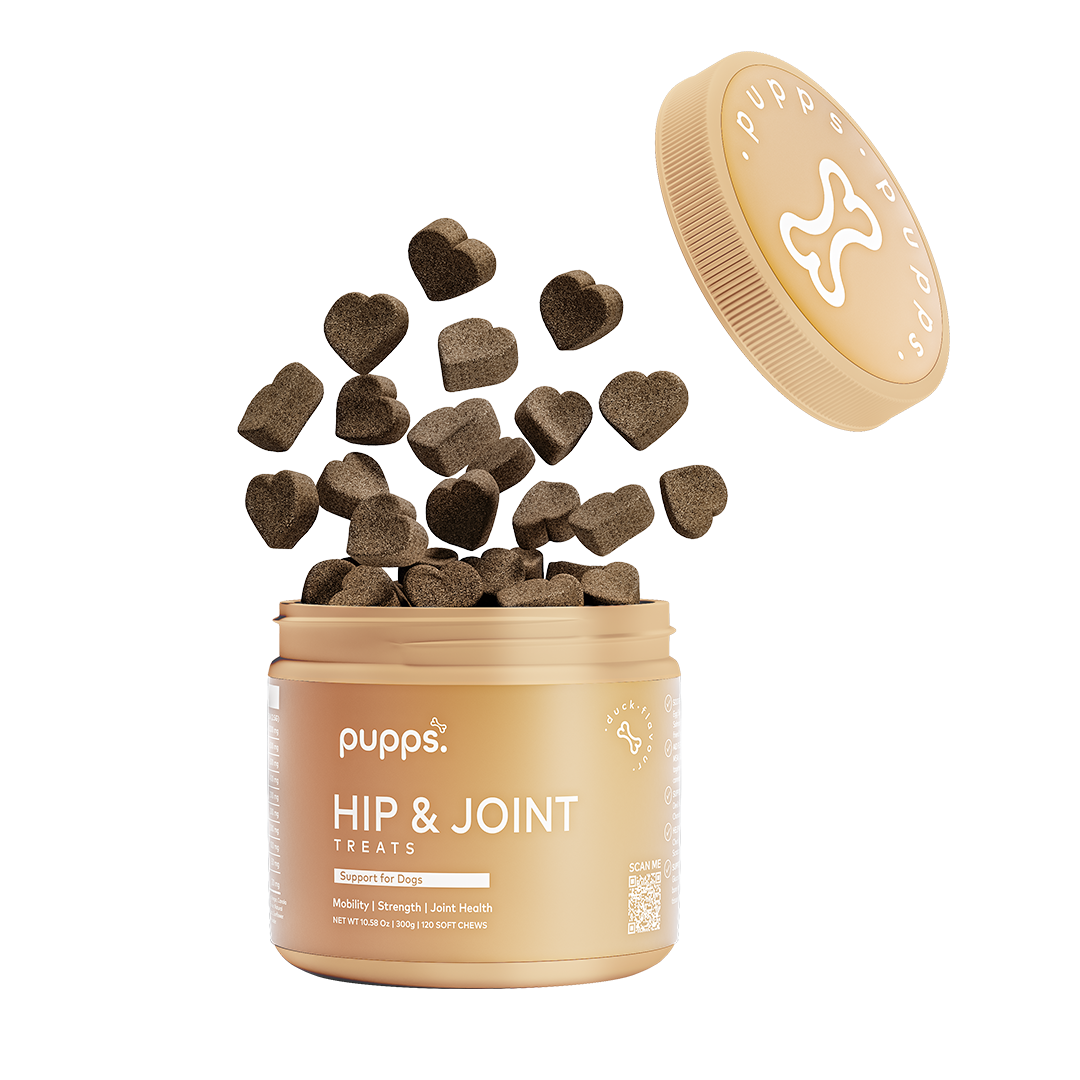
Pupps Itch Relief Treats are specifically formulated to support dogs dealing with itchy skin. They contain targeted ingredients including omega-3 fatty acids and quercetin to work from the inside out — supporting healthy skin and a balanced immune response. Because they're in treat form, dogs tend to take them willingly, making it easy to incorporate into a daily routine throughout allergy season.
When to See Your Vet
Whilst seasonal allergies are very manageable for many dogs, there are situations where veterinary input becomes essential. You should book an appointment with your vet if:
- Your dog is scratching or licking to the point of causing sores, hair loss or broken skin
- You notice signs of a skin infection — such as weeping, crusting, a bad smell, or unusual warmth in the affected area
- Ear infections are recurring repeatedly in the same season
- Your dog's discomfort is severe and significantly affecting their quality of life
- You're unsure whether you're dealing with allergies or something else entirely
Your vet can confirm an allergy diagnosis, rule out other causes of itching, and discuss prescription treatment options if needed. They may also refer you to a veterinary dermatologist for allergy testing if the cause remains unclear.
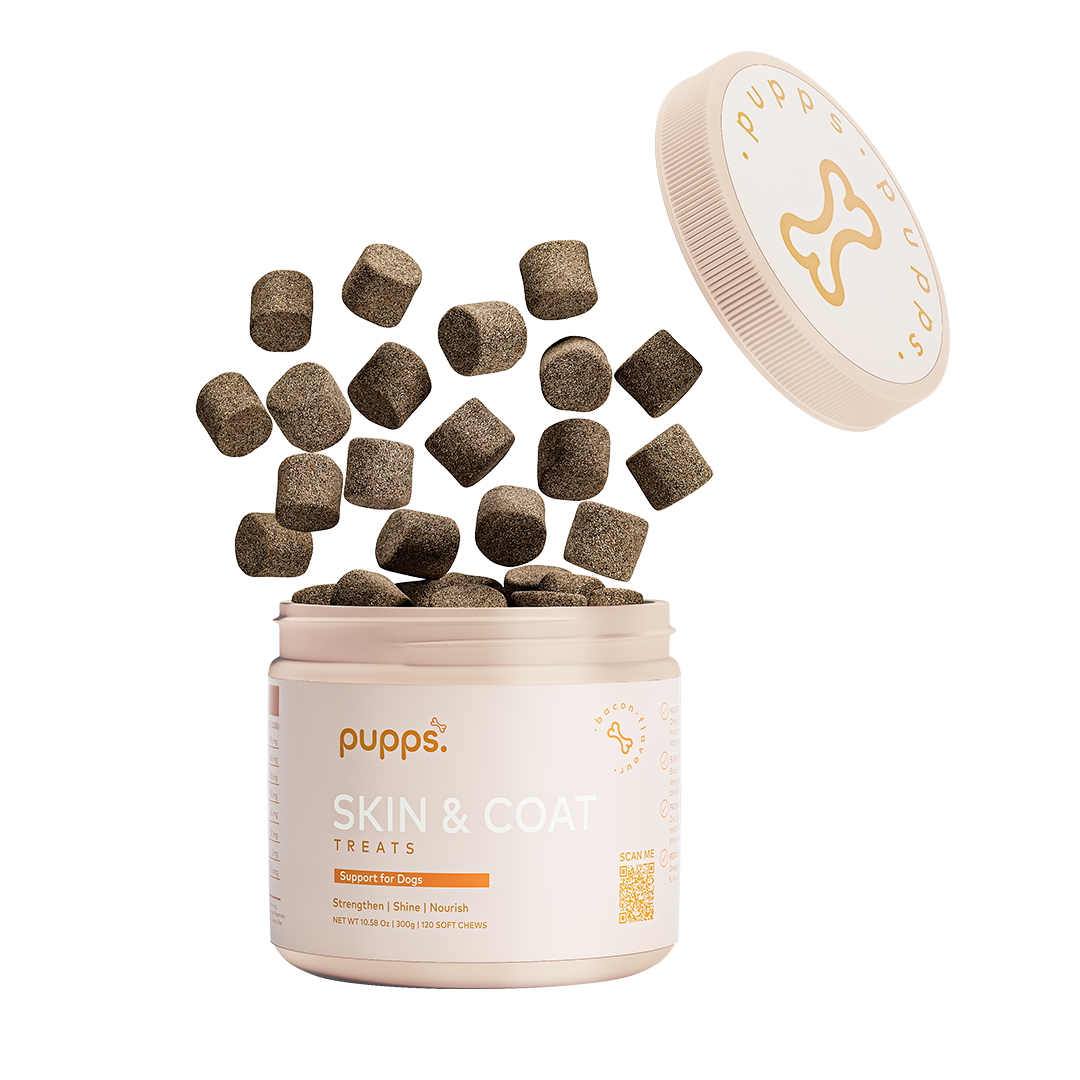
Supplements like Pupps Skin & Coat Treats can complement your dog's ongoing care plan — your vet will usually welcome a multi-pronged approach that combines medical treatment with nutritional and environmental management.
Will My Dog Always Have Spring Allergies?
Environmental allergies in dogs tend to be a long-term condition rather than something that goes away entirely. However, the good news is that with good management, most dogs with seasonal allergies live very comfortable, happy lives. Many owners find that they get better at predicting and managing the symptoms each year as they learn their dog's particular triggers and pattern.
Some dogs do show improvement over time, particularly with consistent management and nutritional support. Others may need ongoing support each allergy season. Either way, the combination of environmental management, appropriate nutrition, and — where needed — veterinary treatment means that spring doesn't have to mean suffering for your dog.
It's also worth noting that environmental allergies can develop at any age. A dog who sailed through three springs perfectly comfortably might suddenly start reacting in their fourth. This isn't unusual and shouldn't be alarming — it just means their immune system has developed a sensitivity over time, and they now need a little extra support during peak season.
A Spring Allergy Plan for Your Dog
To bring everything together, here's a simple action plan to put in place as spring arrives:
- Start wiping paws and belly after every walk from early March onwards
- Increase bathing frequency to once every one to two weeks
- Check the pollen forecast and adjust walk timing on high-count days
- Wash your dog's bedding weekly during peak pollen season
- Consider a targeted skin support supplement throughout spring and summer
- Note down any patterns — when symptoms are worst, which conditions seem to trigger them — to share with your vet
- Book a vet appointment early if symptoms are severe, rather than waiting
Spring is a joyful time of year for most dogs — longer walks, warmer weather, all those fascinating new smells. With the right support in place, even sensitive dogs can enjoy the season to the full. A little extra attention to their skin health from March onwards can make the difference between a dog who struggles through spring and one who bounces through it.
If you're looking for targeted nutritional support for your dog's skin and immune response this spring, explore the full range of Pupps functional treats — formulated specifically to support the health needs that matter most to UK dog owners.



Leave a comment
This site is protected by hCaptcha and the hCaptcha Privacy Policy and Terms of Service apply.