

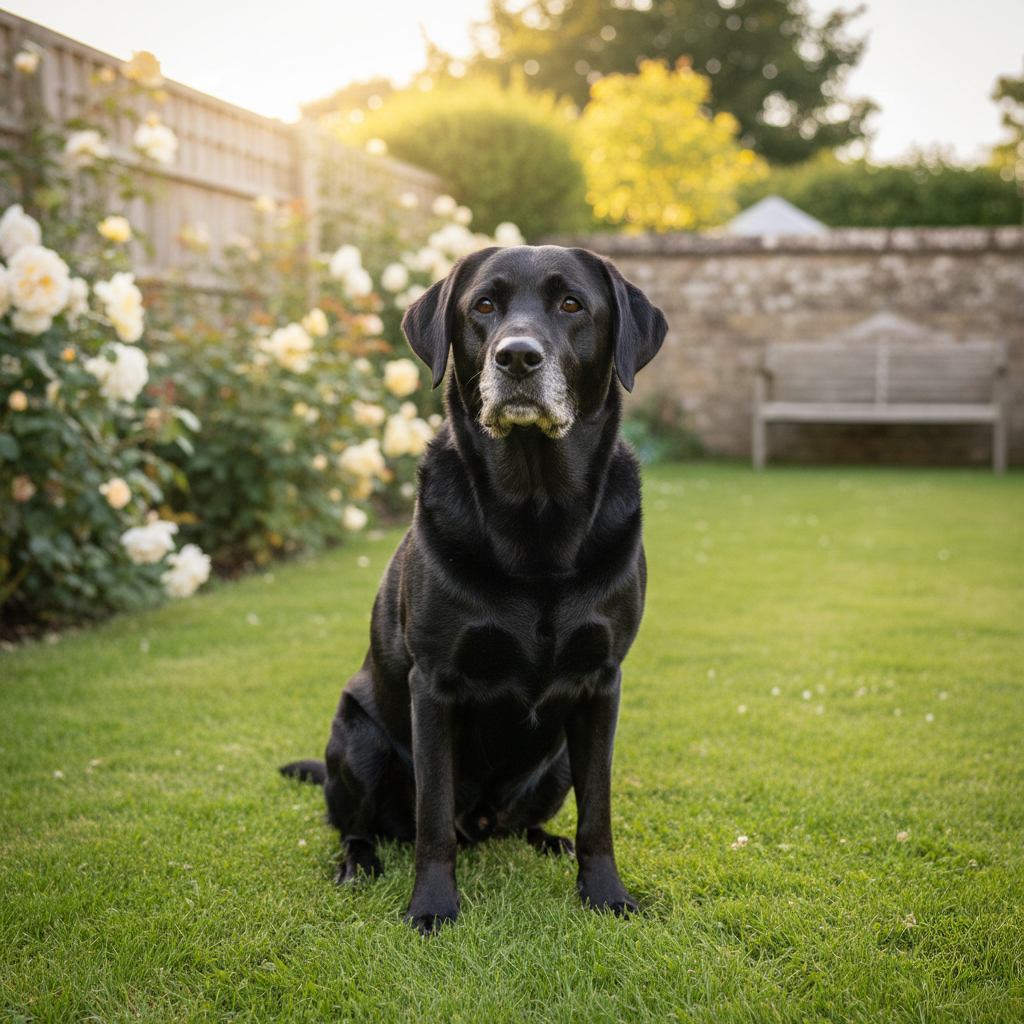
If you've noticed your dog taking a little longer to get up from a nap, you're not imagining things. Joint issues are one of the most common health concerns in UK dogs, affecting an estimated 80% of dogs over the age of eight. But here's what many owners don't realise: the signs often start much earlier than we think, and they're easy to miss if you don't know what to look for.
The good news? Early support can make a genuine difference. Catching the subtle changes before they become obvious problems gives you the best chance of keeping your dog comfortable and mobile for years to come.
Let's look at the signs that your dog's joints might need some extra attention, and what you can actually do about it.
1. They're Slow to Get Up After Resting
This is often the very first sign owners notice, and it's easy to brush off as laziness or just getting older. Your dog lies down for a snooze and when it's time to get up, there's a pause. Maybe a stretch that looks more like stalling. Perhaps they shift their weight a few times before committing to standing.
What's happening is that joints stiffen during periods of inactivity. When your dog rests, the synovial fluid that lubricates their joints settles, and any inflammation or cartilage wear makes those first few movements uncomfortable. It's similar to how you might feel stiff after sitting at a desk for hours, except your dog can't tell you about it.
Watch for this especially on cold mornings. The British weather doesn't do any favours for achy joints, and you might notice it's worse during the damp winter months.
2. Reluctance to Jump or Climb
Your dog used to leap onto the sofa without a second thought. Now they hesitate. They might put their front paws up and look at you, waiting for a lift. Or they avoid the stairs altogether, hovering at the bottom until you come down.
This isn't stubbornness. Jumping and climbing stairs require significant force through the hip and knee joints. If those joints are uncomfortable, your dog learns very quickly which movements cause pain and starts avoiding them. It's their way of self-managing a problem they can't explain to you.
Some owners tell us their dog will still jump up when excited, like when the doorbell rings, but avoids it the rest of the time. That's a classic sign: the excitement overrides the discomfort temporarily, but the underlying issue is still there.
3. A Change in How They Walk
You don't need to be a vet to notice gait changes. Look for any of these during your daily walks:
- Bunny hopping — using both back legs together going uphill or on stairs, rather than alternating
- Swaying hips — an exaggerated side-to-side movement in the back end
- Shorter stride — taking smaller, more careful steps than usual
- Favouring one side — consistently leaning away from the affected joint
- Slowing down on walks — lagging behind or wanting to turn back sooner than they used to
These changes can be gradual, developing over weeks or months. Sometimes it takes a friend or family member who hasn't seen your dog recently to point it out. If someone says 'they seem a bit stiff', take it seriously.
4. Licking or Chewing at Their Joints
Dogs can't reach for a hot water bottle, but they do have an instinct to address discomfort. Repetitive licking or chewing at a specific joint area is your dog's way of trying to soothe pain. The licking releases endorphins, providing temporary relief.
You might notice wet patches on their wrists, hips, or knees. Over time, this constant licking can cause hair loss or even skin irritation in the area, which can then be mistaken for a skin problem rather than a joint issue. If your dog is persistently licking one particular spot near a joint, it's worth investigating the joint itself rather than just the skin.
5. Behavioural Changes You Might Not Connect to Pain
This one catches many owners off guard. Joint discomfort doesn't just affect movement; it affects mood and behaviour. Watch for:
- Irritability — snapping when touched in certain areas, especially during grooming
- Withdrawal — spending more time alone, less interested in play or interaction
- Restlessness at night — difficulty settling, changing positions frequently, panting
- Loss of interest in activities — no longer excited about walks, toys, or games they used to love
A dog in chronic discomfort might seem anxious or unsettled, and it's easy to assume it's a behavioural issue when the root cause is actually physical. If your previously happy-go-lucky dog has become grumpy or withdrawn, a vet check for joint health is a sensible first step.
6. Muscle Loss Around the Hips or Shoulders
When a joint hurts, your dog naturally uses it less. Over time, the muscles around that joint begin to waste, a process called muscle atrophy. You might notice:
- One leg looking thinner than the other
- A more prominent spine or hip bones
- Less definition in the thigh or shoulder muscles
This creates a difficult cycle: weaker muscles mean less joint support, which means more discomfort, which means less movement, which leads to further muscle loss. Breaking this cycle early is one of the most important things you can do for a dog with developing joint issues.
7. They Still Play, But They Pay for It Later
Perhaps the most telling sign of all. Your dog charges around at the park, plays with other dogs, and seems perfectly fine. But later that evening or the next morning, they're notably stiffer. They struggle more than usual. The fun has a cost.
This is extremely common in dogs with early to moderate joint problems. The adrenaline and excitement mask the discomfort during activity, but the inflammation catches up afterwards. If you notice a pattern where your dog is worse after exercise than before, that's a strong signal their joints are under strain.
What Actually Helps: A Practical Approach
Once you've spotted the signs, the question becomes what to do about it. The reality is that joint health responds best to a combined approach rather than any single solution.
Keep Them Moving (But Smartly)
Counterintuitive as it sounds, rest isn't always the answer. Gentle, consistent exercise helps maintain muscle mass and keeps joints lubricated. The key is regularity over intensity. Two shorter walks are better than one long one. Swimming, if your dog enjoys it, is brilliant because it exercises muscles without stressing joints.
What to avoid: sudden bursts of intense activity, long hikes on hard ground, and repetitive ball-throwing that involves sharp stops and turns.
Manage Their Weight
Every extra kilogram puts additional stress on already struggling joints. If your dog is carrying even a little extra weight, reducing it is one of the single most effective things you can do. Work with your vet to determine an ideal weight and adjust food portions accordingly. This alone can make a visible difference in mobility.
Support From the Inside
Certain nutrients play a direct role in joint health, and this is where targeted supplementation can genuinely help. The key ingredients to look for include:
- Glucosamine — a building block of cartilage, supporting repair and maintenance
- Chondroitin — works alongside glucosamine to help maintain cartilage structure
- MSM (Methylsulfonylmethane) — supports the body's natural anti-inflammatory processes
- Green-lipped mussel — a natural source of omega-3 fatty acids that support joint comfort
- Turmeric — contains curcumin, widely recognised for its anti-inflammatory properties
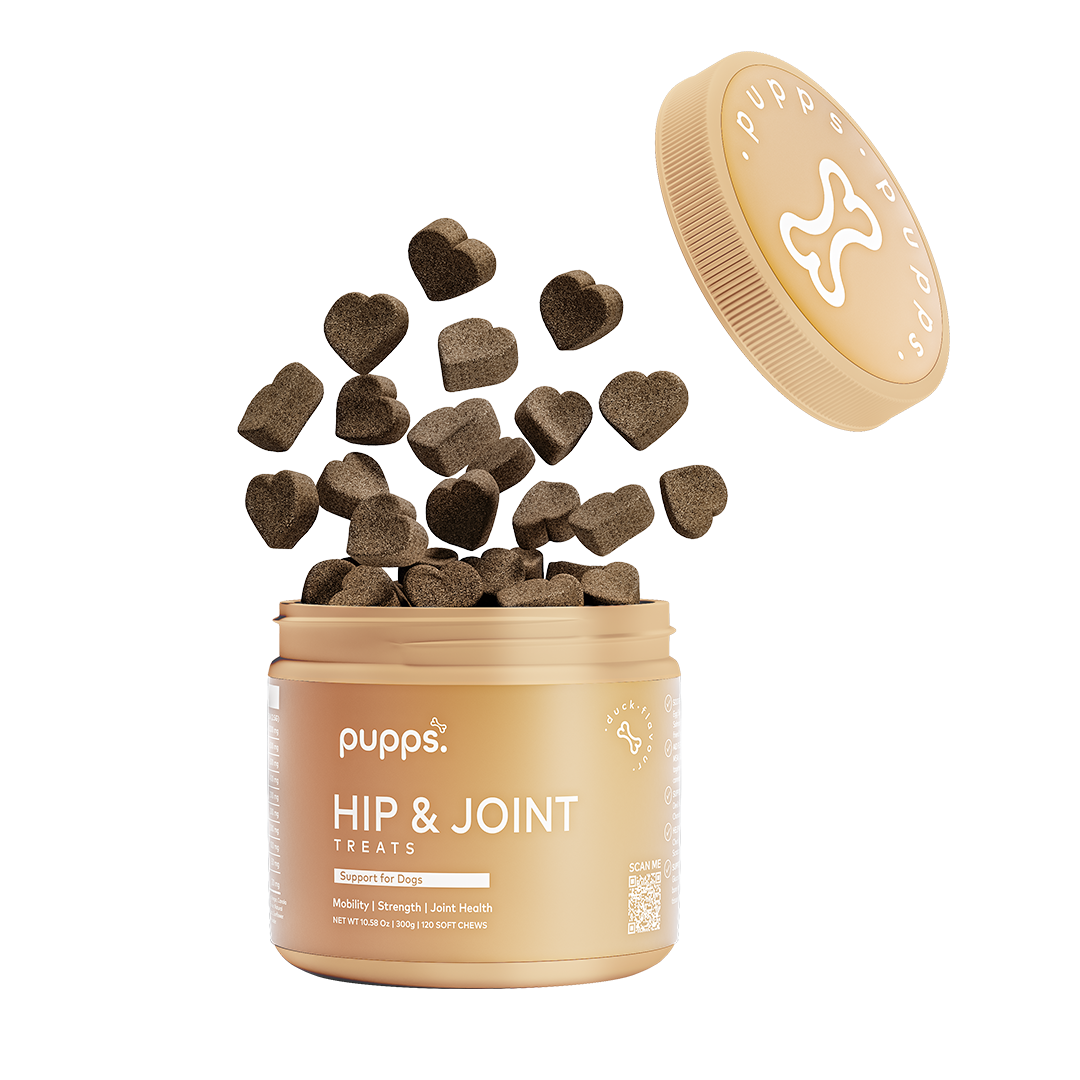
Pupps Hip & Joint Treats combine all five of these ingredients in a daily chew, designed to provide consistent support rather than a quick fix. The combination approach matters because these compounds work together: glucosamine and chondroitin support cartilage structure whilst MSM and turmeric address the inflammatory component.
Consistency is key with joint supplements. Unlike pain medication, which masks symptoms immediately, nutritional support works gradually. Most owners report noticing positive changes within four to six weeks of daily use.
Make Their Environment Easier
Simple changes at home can make a significant difference:
- Orthopaedic bed — memory foam supports joints during rest and reduces morning stiffness
- Non-slip mats — on hard floors to prevent slipping and reduce anxiety about movement
- Ramp or steps — for getting in and out of the car or onto furniture
- Raised food and water bowls — reduce strain on neck and shoulder joints during meals
- Warm, dry sleeping area — keep them away from draughts, particularly in winter
Know When to See Your Vet
If you're seeing any of the seven signs above, a vet check is always worthwhile. Your vet can assess the degree of joint involvement, rule out other causes, and discuss appropriate pain management if needed. Supplements like Hip & Joint Treats work alongside veterinary care, not as a replacement for it.
It's Not Just Senior Dogs
One important point: joint issues aren't exclusively a senior dog problem. Large and giant breeds can develop joint concerns from a young age. Highly active or working dogs put significant strain on their joints. Dogs with previous injuries, even those that seemed to heal completely, may develop problems in that joint later.
If you have a large breed puppy or a young, active dog, supporting their joint health early is one of the smartest investments you can make. Prevention and early support are far more effective than trying to address significant problems down the line.
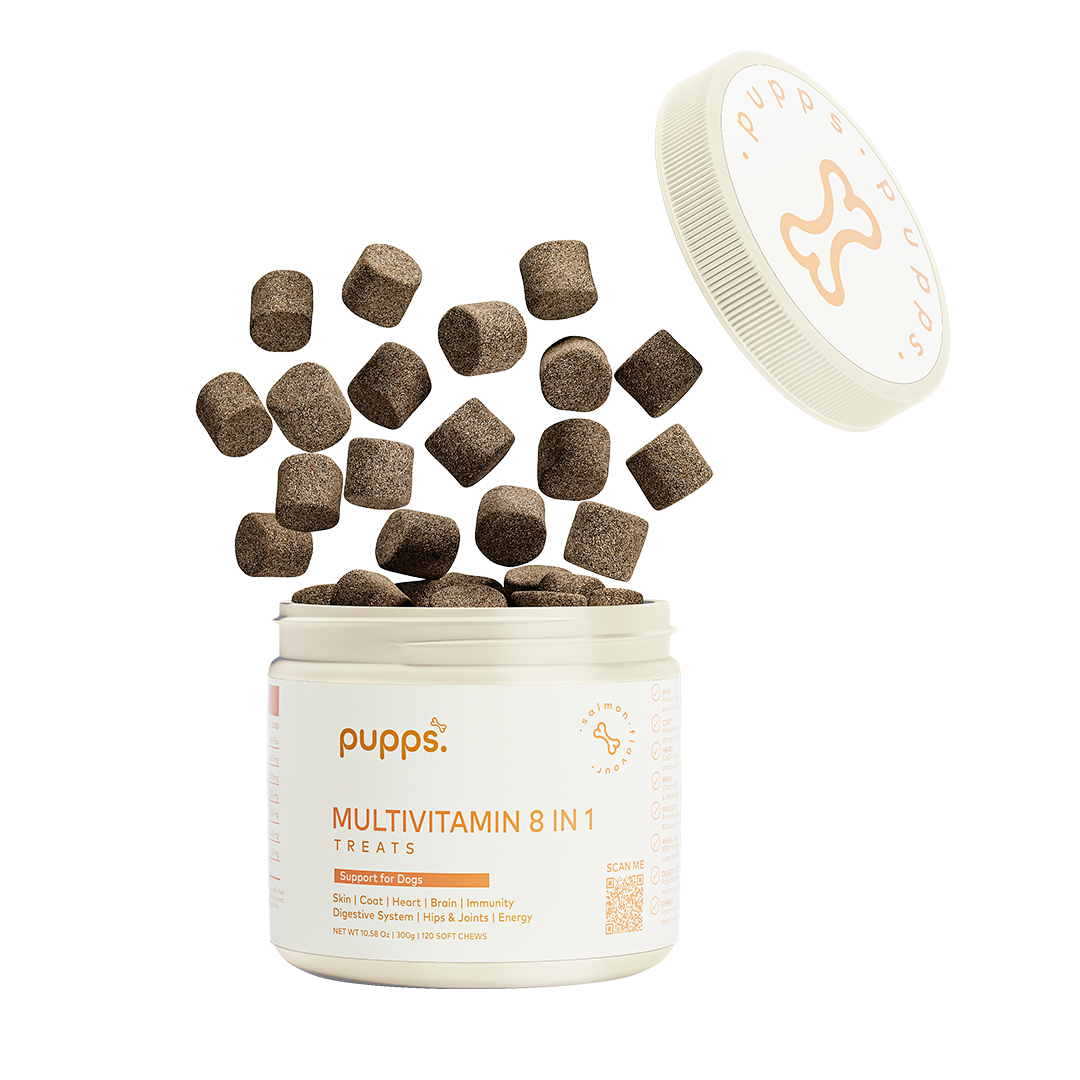
For dogs who are also dealing with general stiffness alongside reduced energy or appetite, a comprehensive multivitamin can help ensure they're getting the full range of nutrients their body needs to support overall health and recovery.
The Bottom Line
Joint problems in dogs rarely announce themselves dramatically. They creep in quietly, one small change at a time. The hesitation before jumping. The slower mornings. The walks that get a bit shorter each week. By the time there's an obvious limp, the process has often been underway for months.
The good news is that once you know what to look for, you can act early. A combination of appropriate exercise, weight management, environmental adjustments, and targeted nutritional support gives your dog the best chance of staying comfortable and active.
Your dog won't tell you their joints are starting to struggle. But if you watch closely, they're showing you every day. And the earlier you respond, the more you can do to help.
Related reading
- Best supplements for senior dogs
- Does my dog need a multivitamin
- Which Pupps treat for which problem
Browse our full range of natural supplements at pupps.com, or start with our Hip & Joint Treats to give your dog the targeted joint support they deserve.



Leave a comment
This site is protected by hCaptcha and the hCaptcha Privacy Policy and Terms of Service apply.