
If your dog is suddenly scratching more this summer and you have ruled out fleas, the most likely cause is an environmental allergy to grass and pollen, which peaks across the UK from early June into late July. You cannot cure this at home, but you can take the edge off it. Rinsing the pollen off after walks, supporting the skin barrier from the inside, and acting early before the skin breaks all make a real difference. And if the skin is already raw, smelly or losing hair, that is a vet visit, not a treat.
This is not another list of the same five causes you have read on every other page. If your dog is itchy all year round the picture is different and worth a separate read. This guide is for the dog who is comfortable in winter and miserable in summer, because that pattern points quite strongly to one thing, and there are a handful of genuinely useful things you can do about it. We will also be straight about what a treat or supplement can and cannot do, because that part matters.
Is it fleas, or is it the season?
Fleas are still the first thing to rule out, even if you cannot see any, because a single bite can set off a sensitive dog. If your flea cover is up to date and applied properly, fleas become unlikely, though never impossible.
The giveaway for a seasonal allergy is the timing and the location. It arrives with warm weather and long grass, eases off in winter, and tends to settle on the paws, belly, ears and face. Dogs with environmental allergies, known as atopic dermatitis, react to grass and tree pollen much as some people react to hay fever, except dogs itch instead of sneeze. It affects roughly one dog in ten, so you are far from alone.
Why summer makes it so much worse in the UK
The most common trigger for itchy dogs is grass pollen, and in the UK grass pollen peaks from early June to late July. That is exactly why so many owners notice the change right about now. Tree pollen runs earlier in spring, and weed pollen stretches later into the autumn. So a dog who reacts mainly in June and July is very likely a grass pollen dog.
Every walk through long grass, every roll on the lawn, and every bit of pollen carried back indoors on the coat and paws keeps the exposure topped up. Which leads neatly to the things that actually help.
What actually helps at home
The honest framing is that you are managing the season, not curing it. The two levers that work are cutting the pollen sitting on the skin, and supporting the skin barrier so it copes better with what does get through. Here is the routine worth building.
- Wipe down after every walk. A damp cloth or a wipe made for dogs, over the paws, belly and legs, removes most of the pollen sitting on the coat. This is the single highest value habit on the list.
- Time your walks. Pollen tends to be highest in the early morning and the evening, so a walk in the middle of a dry day usually means less exposure.
- Rinse, but do not over bathe. A cool rinse soothes hot skin and washes off allergens, but bathing too often strips the natural oils and makes things worse. Once a week with a gentle soothing shampoo suits most dogs.
- Support the skin from the inside. Skin that is well nourished holds its moisture and defends itself better. Omega 3 fatty acids are the nutrient most consistently linked to calmer, less reactive skin, which is why they sit at the heart of skin focused supplements.
- Keep the home topped up too. Washing bedding weekly and a quick vacuum cuts the pollen reservoir your dog lies in every day.
A note from us, because we have lived this one
This one is close to home. Rory, the Maltipoo behind Pupps, is a poodle cross, and that curly coated, fine skinned type tends to feel the season keenly. The first summer we had him we spent weeks convinced it was something in his food, when really it was the simplest thing imaginable. He was rolling through long grass on every walk and bringing half a meadow home on his legs. The after walk wipe down sounds almost too basic to be worth mentioning. It turned out to be the thing that helped him most.
Where Pupps fits
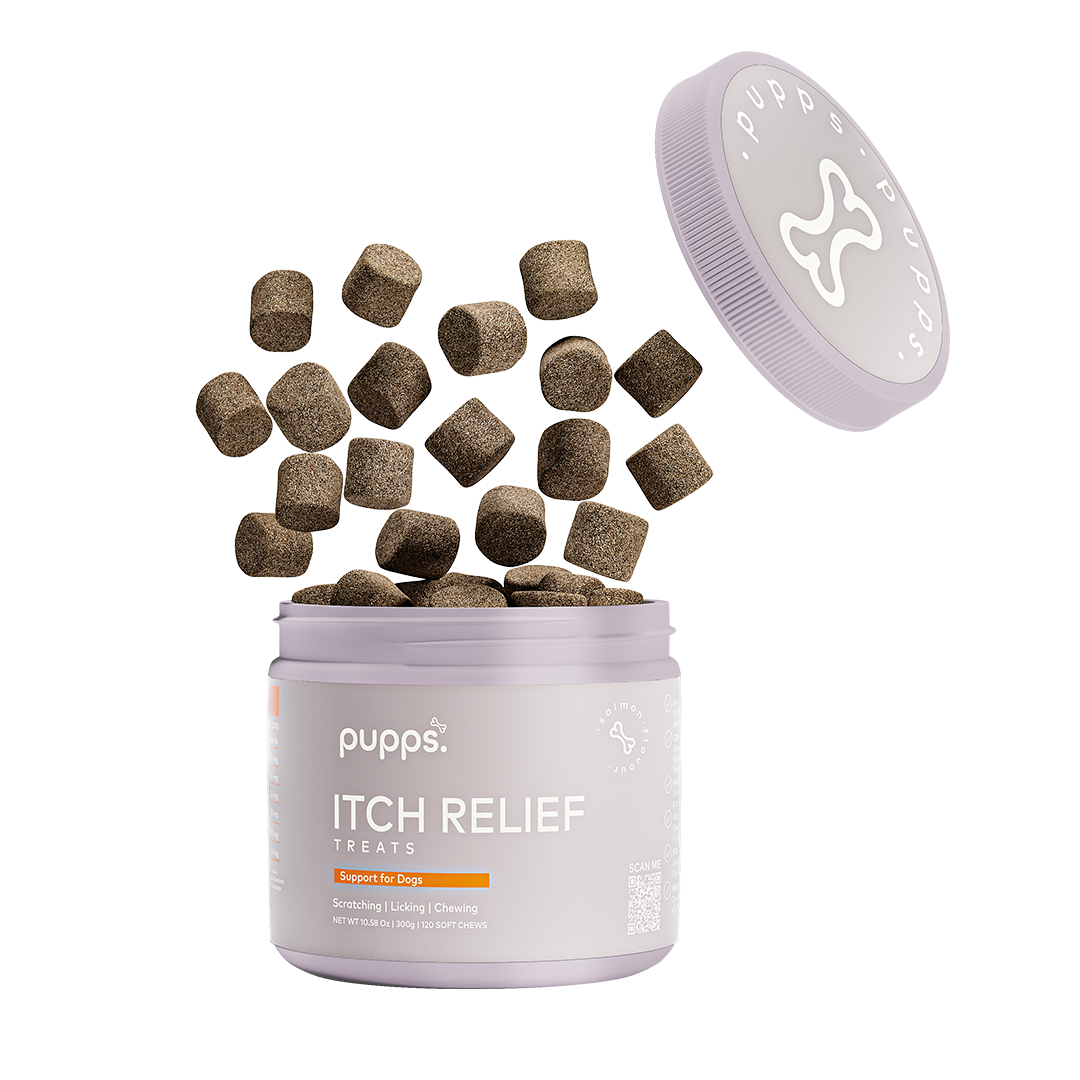
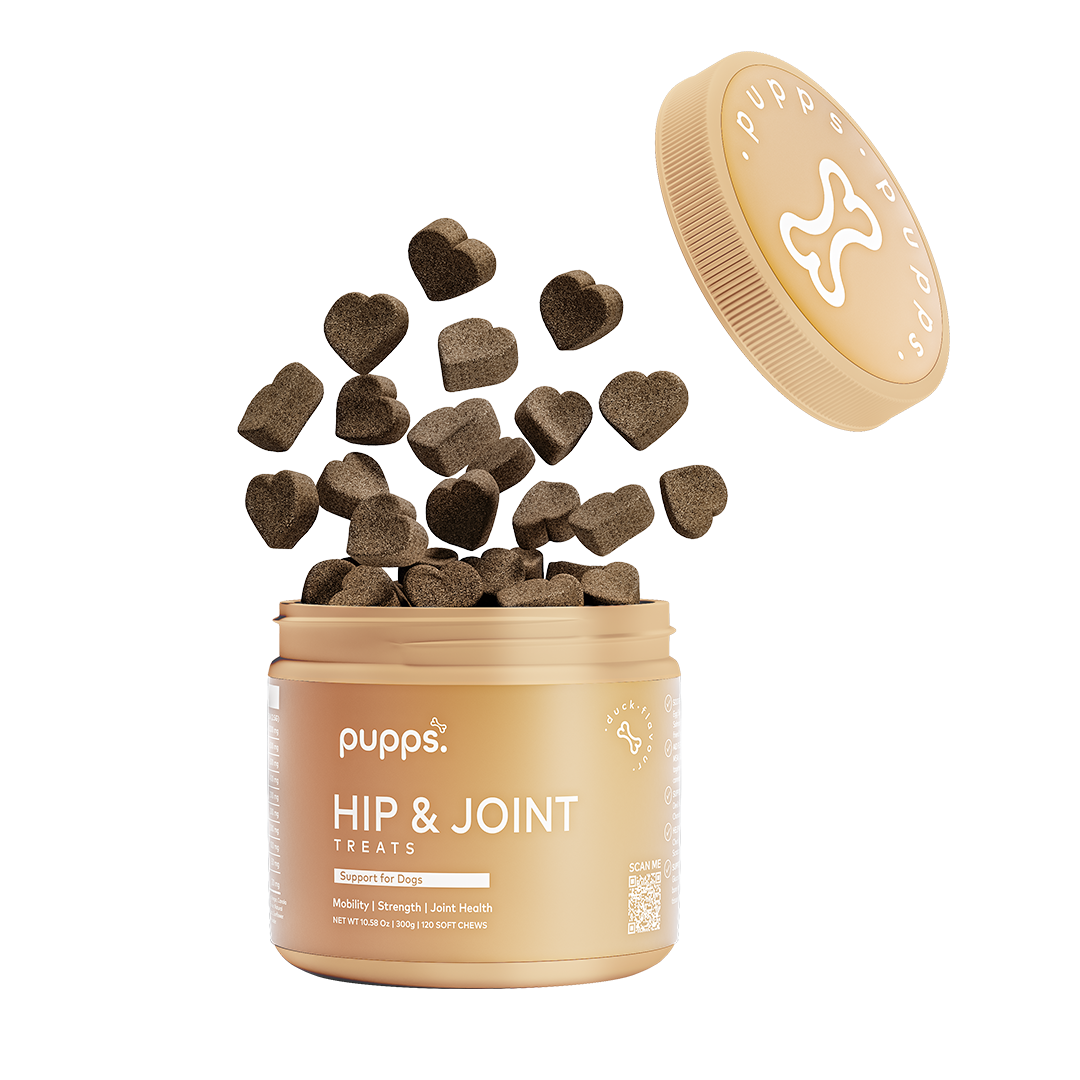
This is the gap our Itch Relief soft chews are made for. They are a daily treat rich in omega 3 and skin supporting ingredients, designed to support a healthy skin barrier from the inside so the skin is better placed to cope through the high pollen months.
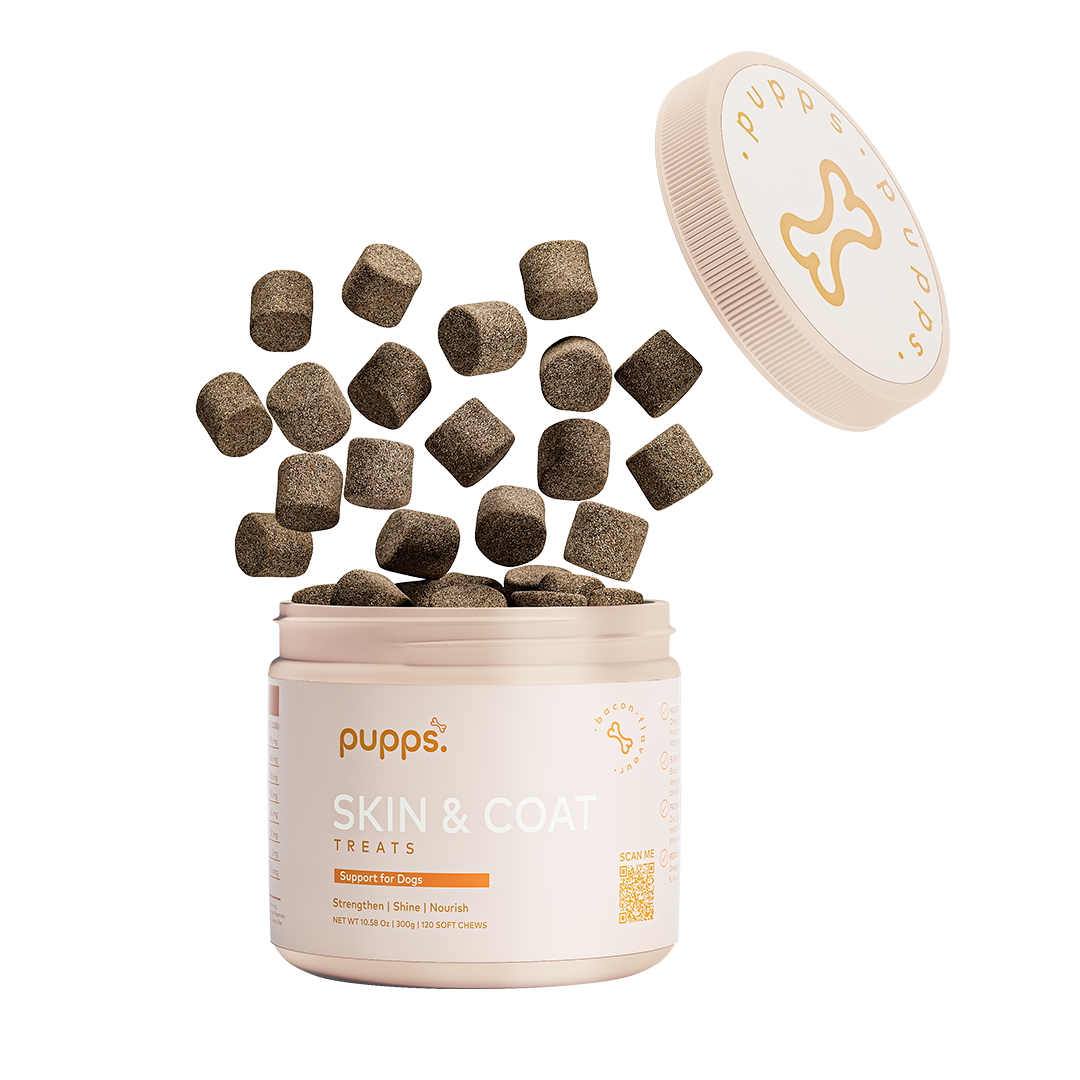
To be straight with you, they are support, not a cure. They will not switch off a genuine allergy, and they are no substitute for proper flea cover or a vet when one is needed. What they do is give the skin a steadier foundation, which, alongside the after walk routine above, is a gentle and sensible way to approach a long season. If your dog's main issue is a dull or dry coat rather than itching, our Skin and Coat chews are the better starting point. Both come with our Lifetime Money Back Guarantee, so there is no risk in seeing whether they suit your dog.
When to see your vet
Some itching has gone past anything a treat or a routine can help with, and carrying on at home only lets it worsen. Book a vet if you notice any of these:
- Skin that is broken, raw, weeping or bleeding
- A yeasty or unpleasant smell from the skin or ears
- Hair loss or bald patches
- Constant licking or chewing of one particular spot
- Ear infections that keep coming back
- A dog so uncomfortable they cannot settle or sleep
These point to infection or a more significant allergy that needs proper treatment, sometimes prescription medication. There is no prize for waiting it out, and early help is usually quicker and kinder on your dog.
Frequently asked questions
Can I give my dog anything over the counter for itchy skin?
For mild seasonal itching you can support the skin with omega 3 and a good after walk routine, and many owners use a soothing shampoo recommended by their vet. Avoid human antihistamines or any human medicine without speaking to your vet first, since safe types and doses for dogs differ.
Why is my dog itchy but has no fleas?
The most common reason is an environmental allergy to grass and pollen, which is why it often flares in summer. Food sensitivities, skin infections and mites can also cause it, so if it is severe or lasts all year, see your vet.
When does grass pollen season peak in the UK?
Grass pollen, the most common trigger for dogs, peaks from early June to late July across most of the UK. Tree pollen comes earlier in spring and weed pollen later in summer.
Will my dog grow out of summer allergies?
Usually not. Environmental allergies tend to be lifelong and can appear at any age, even to things your dog has lived alongside for years. The goal is to manage each season well rather than expect it to disappear.
How long do omega supplements take to help the skin?
Skin changes are gradual. Most owners look for a difference over four to eight weeks of daily use, because the skin barrier rebuilds slowly rather than overnight.


Leave a comment
This site is protected by hCaptcha and the hCaptcha Privacy Policy and Terms of Service apply.