





The short answer: yes, many dogs, especially older ones, seem stiffer in cold weather. Cold muscles are tighter and stiff joints show up most after a night's rest, so cold mornings are when you notice it. Shorter, more frequent walks, a warm bed off the floor, a healthy weight and daily joint support all help, and your vet should check any limping or pain.
If your older dog takes a bit longer to get up on frosty mornings, or stands at the bottom of the stairs thinking about it, you are not alone. Here is why the cold shows up stiffness, a simple winter routine that helps, and when to see your vet.
Do dogs get stiffer in cold weather?
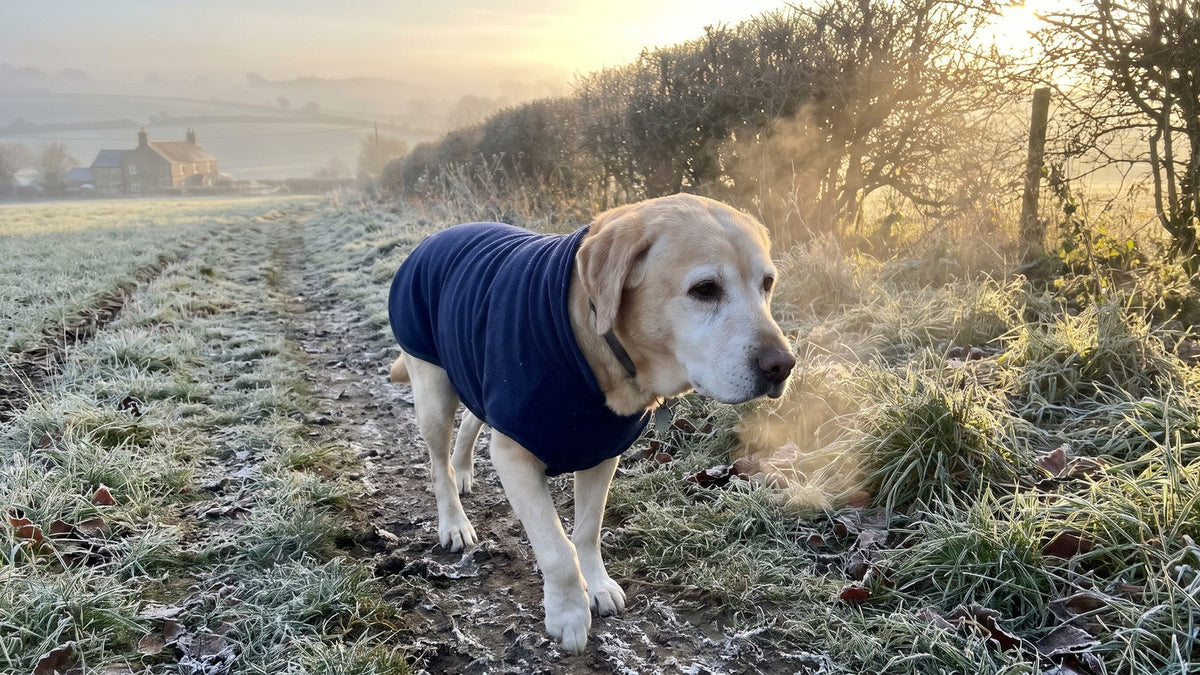
Many owners notice it every winter, and older dogs show it most. The cold doesn't damage joints, but it makes the stiffness a dog already has easier to see. A younger dog with healthy joints warms up in a few steps. An older dog with worn joints feels it more and takes longer to loosen up.
Signs your dog is feeling the cold in their joints:
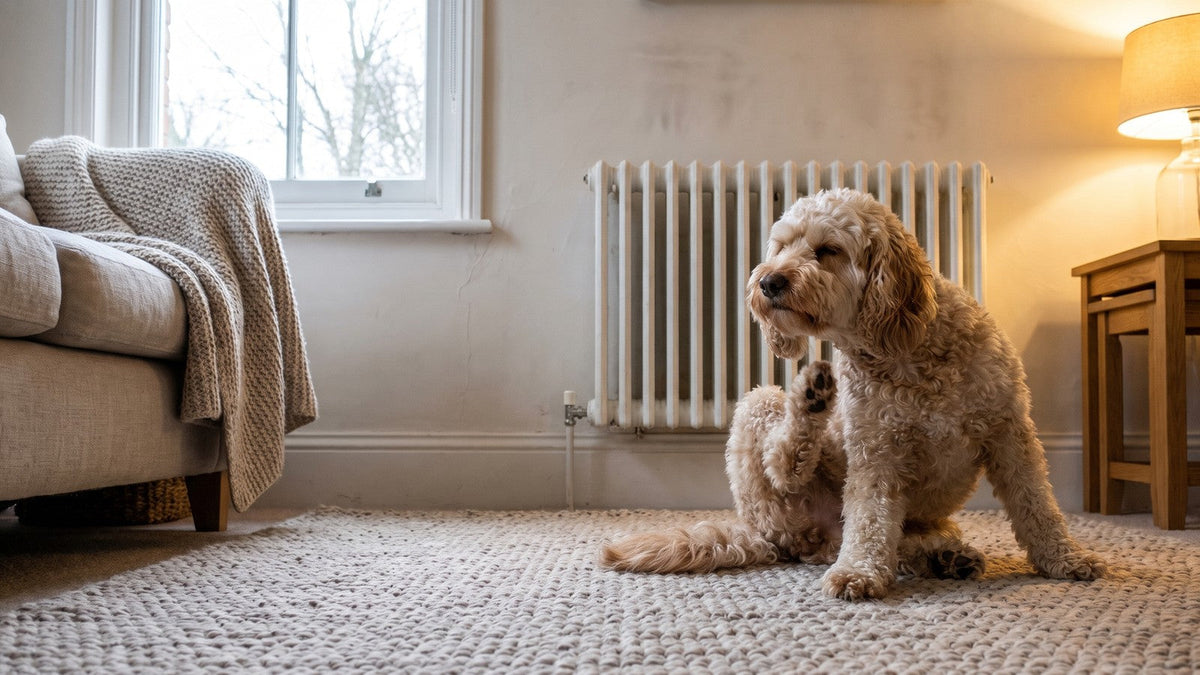
- Slow to get up after sleeping, especially first thing
- Stiff or shorter steps for the first part of the walk, then loosening up
- Hesitating at the stairs, the car or the sofa
- Lagging behind on walks or wanting to turn back sooner
- Licking at a leg or joint
For more early signs, read 7 signs your dog's joints need support.
Why cold mornings show up stiffness
Joints are cushioned by cartilage and kept moving smoothly by joint fluid. With age, cartilage wears thinner and joints lose some of that easy movement. Muscles around the joints help hold everything steady.
In the cold, muscles tighten and blood flow to the legs drops a little as the body keeps its core warm. After a long night lying still on a cool floor, everything is at its stiffest. That is why the first few minutes of a winter morning walk often look worse than the rest of the day. Movement warms the muscles and gets the joints going again.
Shorter walks, not no walks
It is tempting to cut walks right back when your dog seems stiff and the weather is grim. But gentle movement is one of the best things for stiff joints, because it keeps muscles strong and joints moving. What helps, and why:
- Two or three shorter walks instead of one long one. Less time on cold ground, and the joints get moving more often through the day.
- Warm up first. A few minutes of gentle pottering around the house or garden before you head out loosens the muscles, so the first stretch of the walk is easier.
- Start slow, finish slow. Let them walk at their own pace for the first five minutes, and walk the last bit home rather than ending on a run.
- Pick soft, flat ground. Grass and paths are kinder than frozen, uneven fields. Watch out for ice.
- A coat for thin coated or older dogs. Keeping their body warm helps keep their muscles warm.
- Dry them off properly when you get in, especially their legs and belly. A wet dog lying down gets cold fast.

Warm beds, rugs and ramps
Where your dog sleeps matters as much as how they walk. Cold floors draw heat out of the body and make getting up harder.
- A thick, supportive bed raised off the floor, away from draughty doors. Memory foam or an orthopaedic bed spreads their weight and takes pressure off hips and elbows.
- A blanket they can snuggle into keeps the warmth in overnight.
- Rugs or non slip mats on hard floors. Slipping on laminate or tiles is hard on stiff joints and can knock an older dog's confidence.
- Ramps or a step for the car and the sofa, so they aren't jumping on stiff legs.
- Help them up the stairs, or keep a bed downstairs so they don't feel they have to follow you up.
Weight and joints
Every extra kilo is more load on every step. Older dogs often move less in winter but eat the same, so the weight creeps on just when their joints can least afford it. If walks get shorter, trim their food a little to match, and swap high calorie treats for small pieces of carrot or green beans. Your vet can tell you your dog's ideal weight. Even a small loss can make getting up easier.
The ingredients that matter
Alongside the routine above, a daily joint supplement supports stiff joints and comfortable movement. The ingredients to look for:
- Glucosamine, a building block of cartilage. The body makes less of it with age.
- Chondroitin, which works alongside glucosamine to support cartilage structure.
- MSM, a natural sulphur compound that supports connective tissue and joint comfort.
- Green lipped mussel, which naturally contains omega 3 and joint supporting nutrients.
- Omega 3 from fish oil and turmeric, which support the body's natural response to inflammation.
Look for clear amounts per chew, so you know what your dog is getting. Read how to choose a joint supplement for more.
Slower on cold mornings?
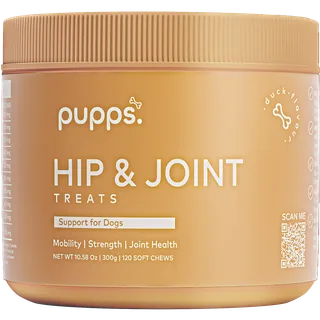
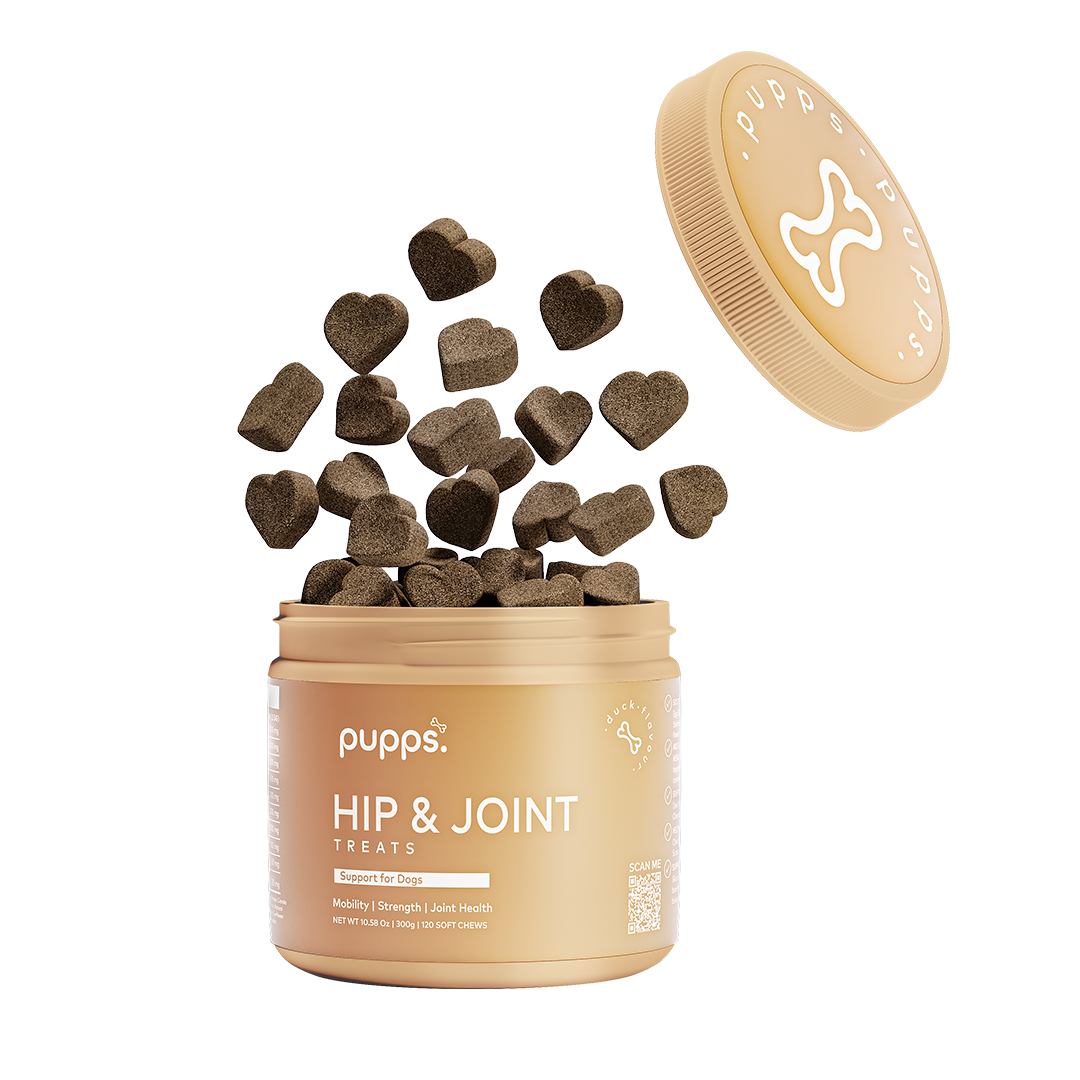
Pupps Hip & Joint soft chews support stiff joints and comfortable movement, so they're back on the stairs. Each chew has 1000mg glucosamine, 600mg MSM and 400mg chondroitin, plus green lipped mussel, salmon oil and turmeric, in a duck and bacon chew dogs actually want to eat. A vet reviewed formula, rated 5 stars from 8,000+ reviews, with free Express delivery and our Lifetime Money Back Guarantee.
Joint support isn't a painkiller, so it builds up with daily use. Some owners notice a change quickly, but give it up to 30 days of daily use before you judge. Starting at the beginning of winter gives the best run at the cold months.
When to see your vet
Stiffness that eases after a few minutes of walking is common in older dogs. But see your vet if:
- Your dog is limping, or holding a leg up
- They cry out, yelp or seem in pain when they move or are touched
- The stiffness lasts all day or is getting worse
- A joint looks swollen or feels hot
- They suddenly can't manage stairs or jumps they did last week
- They seem low, are off their food or don't want to walk at all
Your vet can find the cause and talk you through the options, including pain relief if your dog needs it. Older dogs do well with a check every six months.
Frequently asked questions
Why is my older dog stiff in the morning?
Joints and muscles stiffen after a long rest, and cold makes it more noticeable. Most dogs loosen up after a few minutes of gentle movement. A warm bed off the floor and a short warm up before walks help.
Should I walk my dog less in winter?
Walk shorter, not less often. Two or three gentle walks a day keep the joints moving and the muscles strong without long spells on cold ground.
Do dogs need a coat in winter?
Older, small and thin coated dogs often do. Keeping their body warm helps their muscles stay warm, which helps stiff joints.
When should I start joint supplements for my dog?
Many owners start Hip & Joint when they first notice stiffness or slowing down. Large and very active breeds often start earlier. Give it every day, for up to 30 days before you judge.


Leave a comment
This site is protected by hCaptcha and the hCaptcha Privacy Policy and Terms of Service apply.