



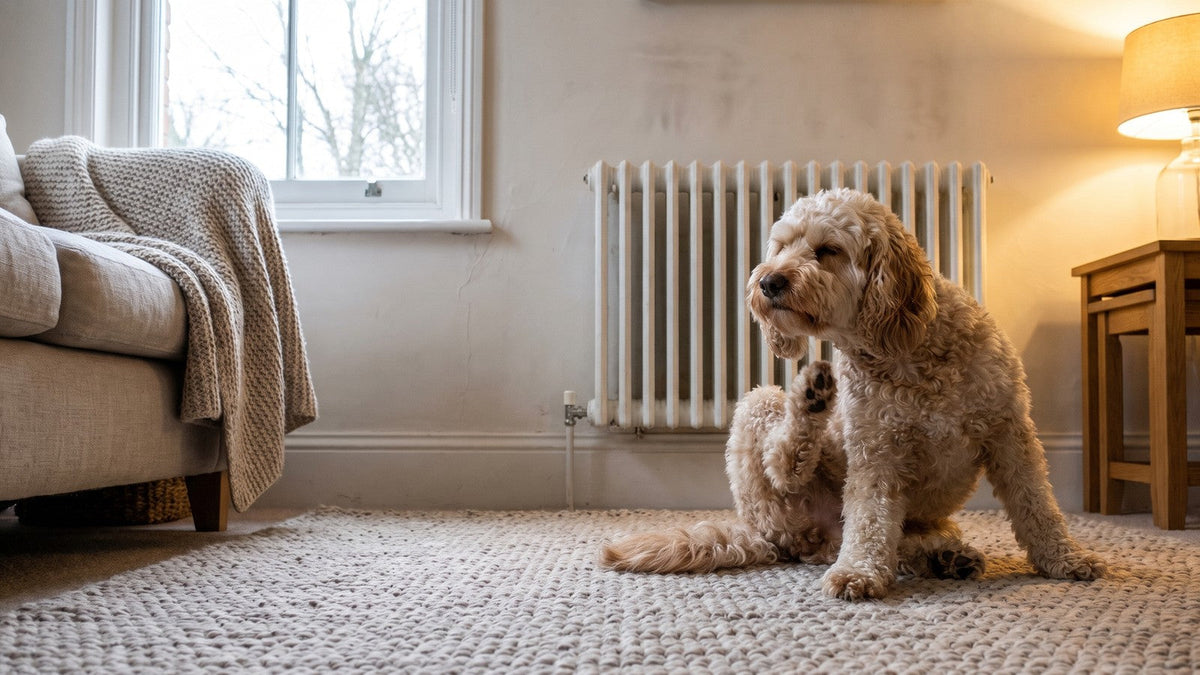
The short answer: many dogs get itchier in winter because central heating dries the air indoors, and dry air dries out their skin. Add hot baths, damp coats and cold, muddy walks, and the skin barrier struggles. A more humid home, gentle drying, omega 3 in the diet and daily skin support can all help, and your vet should check any red, sore or sudden itch.
If your dog started scratching around the time the heating went on, you are not imagining it. Here is why winter makes so many dogs itchy, what you can change at home tonight, and when the itch is a sign of something else.
Why is my dog itchier in winter?
A dog's skin has a thin protective layer, the skin barrier, made of oils and moisture. When it is working well it keeps water in and irritants out. In winter that barrier gets hit from every side: dry heated air inside, cold wind and rain outside, more baths after muddy walks, and less time in the sun. When the skin dries out, it feels tight and flaky, and dry skin itches.
Signs it is dry winter skin rather than something else:
- White flakes in the coat, especially along the back (winter dandruff)
- A dull, rough coat that feels drier than usual
- Scratching that is worse in the evening, when the heating is on and they are lying by the radiator
- Skin that looks dry but not red, broken or smelly
Central heating, dry air and your dog's skin
Warm air holds moisture, but central heating warms the air without adding any, so the air in a heated UK home can get very dry over winter. Your own lips and hands probably feel it too. Your dog feels it all over, often while lying right next to the heat source.
What helps, and why:
- Move the bed away from the radiator or fire. A spot a little further from direct heat means less drying air blowing over their skin all night.
- Keep the heating a touch lower. A slightly cooler house is less drying, and most dogs are happy with a blanket.
- Add some moisture to the air. A humidifier in the room where your dog sleeps helps, and so does drying washing on an airer in that room.
- Keep fresh water down. Well hydrated dogs have better hydrated skin, and dry indoor air makes them lose more water through breathing.

Baths, towels and wet walks
Winter walks mean mud, and mud means baths. But every bath washes away some of the natural oils that protect the skin, and hot water strips them faster.
- Bath less often. For most dogs, once every four to six weeks is plenty. Rinse muddy legs and bellies with lukewarm water instead of a full bath.
- Use a gentle dog shampoo, never a human one. Human shampoo is made for different skin and can dry a dog out.
- Lukewarm, not hot. Hot water feels nice on a cold day but dries skin more.
- Dry them properly. A damp coat sitting against the skin for hours can leave it sore and itchy. Towel dry well, paying attention to armpits, between the toes and under the collar.
- Wipe paws after walks. Grit and de icing salt on winter pavements can irritate paw pads and the skin between the toes, which leads to licking. A wipe with a damp cloth when you get in takes ten seconds.
- Brush more often. Brushing spreads the coat's natural oils and lifts away dead skin and flakes.
Food, omega 3 and skin from the inside
Skin is built from what your dog eats. Omega 3 fatty acids, especially EPA and DHA from fish oil, are part of what keeps the skin barrier supple and holding on to moisture. Some dogs, particularly on dry food, don't get much of them.
- A complete, good quality food is the starting point. Sudden food changes can upset the tummy, so change slowly over 7 to 10 days if you switch.
- Omega 3 from fish oil supports skin and coat. You will often see the difference in the coat first, as it gets softer and shinier.
- Gut health matters too. A balanced gut supports the skin barrier, which is why many skin supplements include probiotics.
When it is something else: fleas, allergies, see your vet
Not every winter itch is dry skin. Fleas love centrally heated homes and keep breeding all winter, so keep flea treatment up to date all year round. Some dogs react to dust mites, which do well indoors in winter, or to something in their food. If the itch keeps coming back, it is worth finding out why. Read why is my dog itchy for the common causes.
See your vet if:
- The skin is red, broken, bleeding, scabby or smells
- There are bald patches or hot, sore spots
- The itch came on suddenly and is severe
- Your dog is chewing their paws raw or keeps shaking their head or scratching their ears
- Your dog seems unwell or off their food
If in doubt, ring your vet. They can find the cause and treat it.
Daily support for itchy winter skin
Once your vet has ruled out anything that needs treatment, a daily skin supplement can support your dog through the dry months, alongside the changes above.
Scratching more since the heating went on?
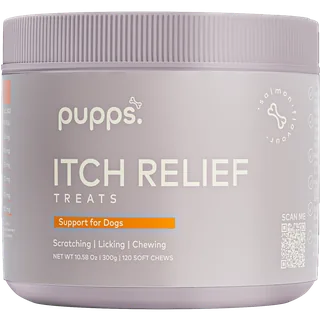
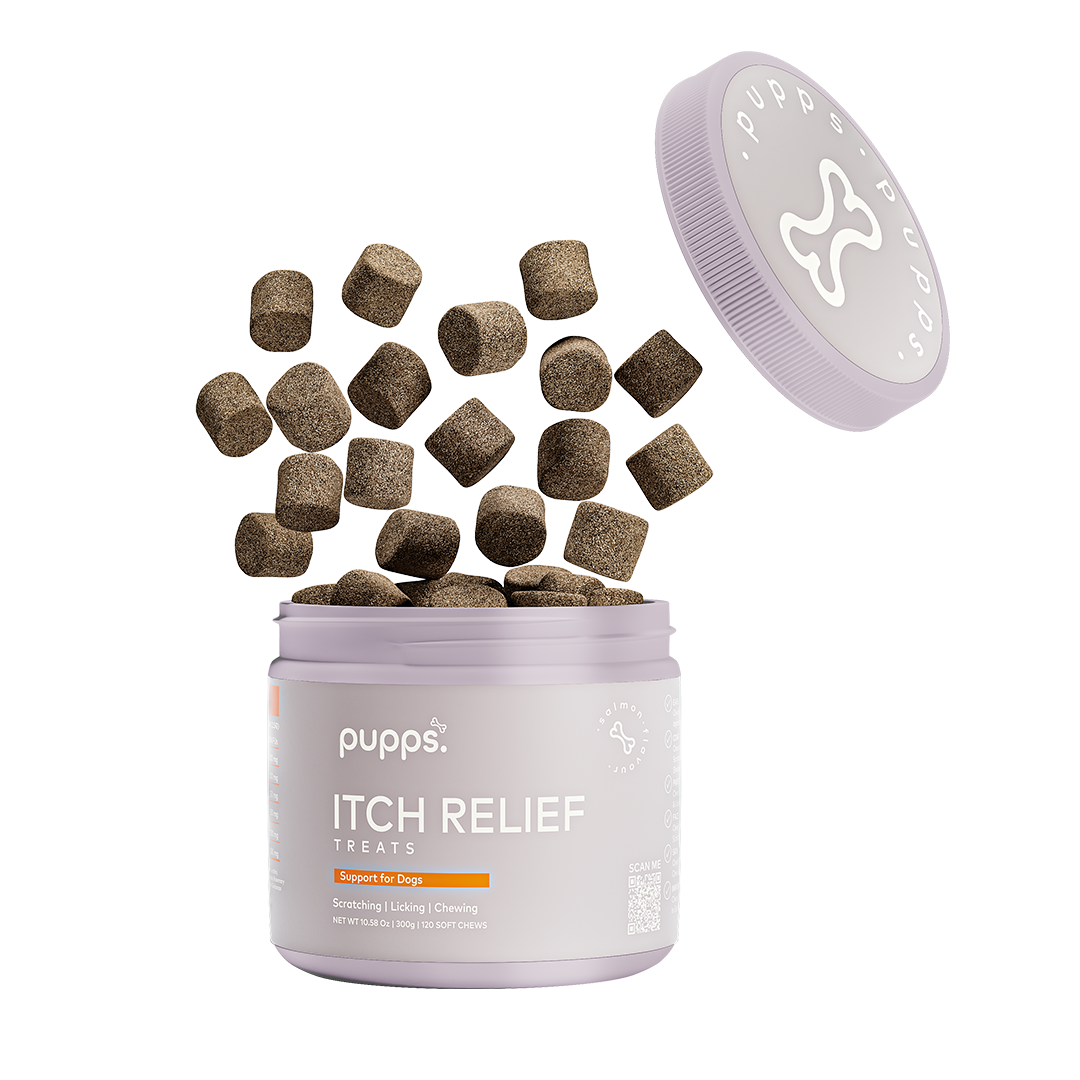
Pupps Itch Relief soft chews help soothe itchy skin from the inside and ease scratching and paw licking. Each chew has 500mg colostrum, 200mg turmeric, licorice root, salmon oil and a 3 billion probiotic blend to support the skin barrier, in a salmon flavoured chew dogs actually want to eat. A vet reviewed formula, rated 5 stars from 8,000+ reviews, with free Express delivery and our Lifetime Money Back Guarantee.
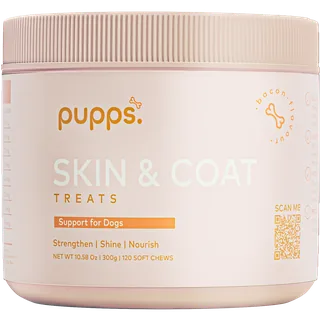
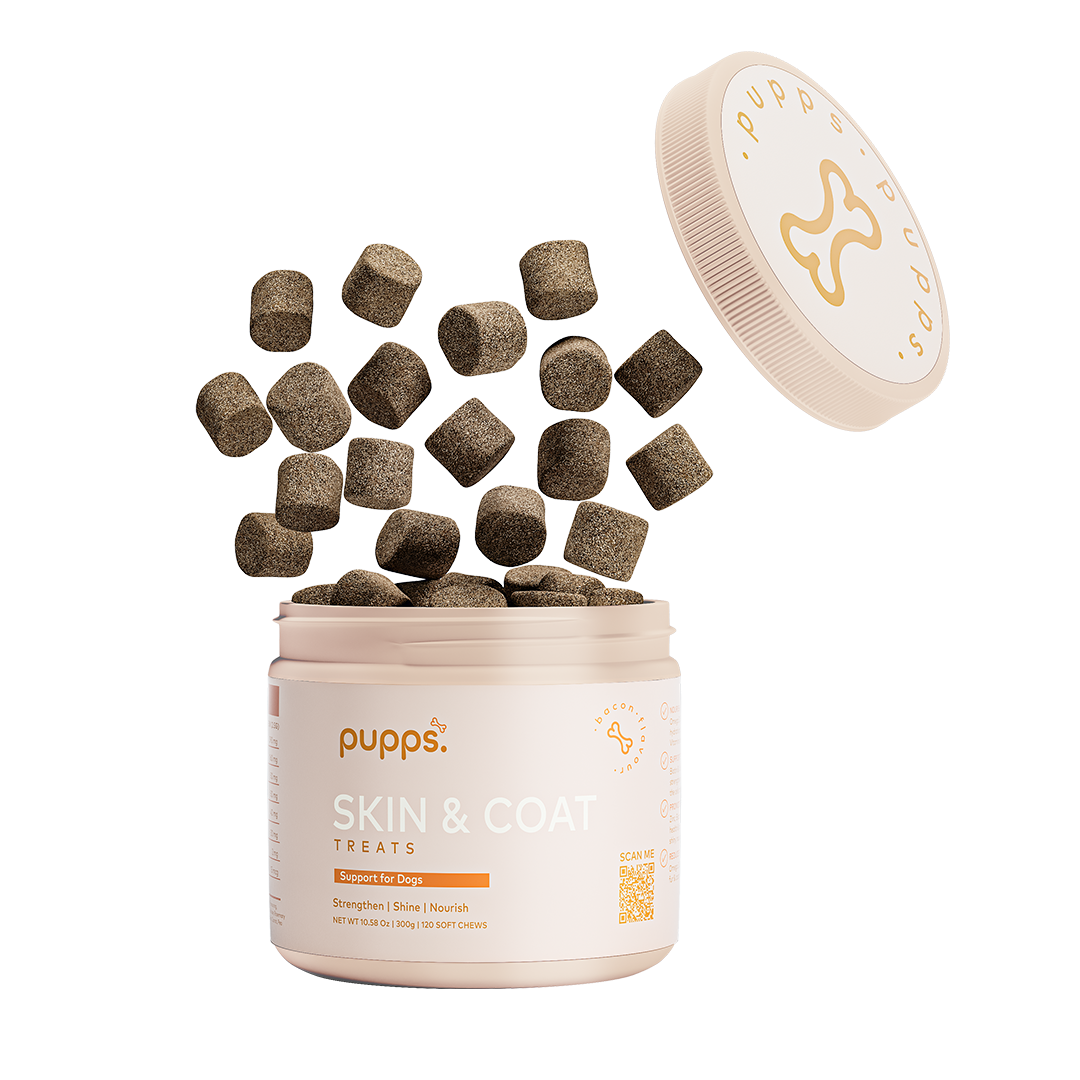
If the itch is mild and it is more a dry, dull, flaky coat that bothers you, Pupps Skin & Coat soft chews are the coat option, with omega 3 (EPA and DHA), biotin, zinc and vitamins A, D and E for softer skin and a shinier coat.
Give them every day. Some owners notice a change quickly, but give it up to 30 days of daily use before you judge, and if you can, start before the heating season next year.
Frequently asked questions
Why is my dog scratching more in winter?
Usually dry skin. Central heating dries the air, and baths, wet walks and cold wind dry the skin further. Fleas also keep going in warm homes all winter, so keep flea treatment up to date.
Is dandruff in dogs normal in winter?
A few white flakes in winter are common and usually mean dry skin. Brush regularly, bath less and add omega 3. If the skin under the flakes is red, sore or greasy, see your vet.
Can I put moisturiser or coconut oil on my dog's dry skin?
Don't use human creams, as dogs lick them off and some ingredients aren't safe for dogs. Ask your vet about a dog safe product, and support the skin from the inside with omega 3.
How long do Itch Relief chews take to work?
Give Itch Relief every day. Some owners notice a change quickly, but give it up to 30 days of daily use before you judge.
Can I give Itch Relief and Skin & Coat together?
Yes, many owners do. Read can I give my dog more than one supplement for how to combine them.




Leave a comment
This site is protected by hCaptcha and the hCaptcha Privacy Policy and Terms of Service apply.