












The short answer: older dogs are usually restless at night because of stiff, achy joints, needing the toilet more often, or age related confusion that muddles day and night. A supportive bed, a late toilet break, a night light and a steady daily routine help many senior dogs settle. If the change is sudden, see your vet.
If your older dog has started pacing, panting, whining or waking you up in the small hours, you're not alone. It's one of the most common changes owners notice as their dogs age, and it's exhausting for everyone. The good news is that there's usually a reason, and plenty you can do.
Why senior dogs get restless at night
1. Stiff, achy joints
Joint stiffness often feels worse once a dog has cooled down and lain still for a while. You might see them shifting position, getting up and lying down again, or struggling to get comfortable.
Clues: slow to get up, reluctant on the stairs or to jump into the car, licking at a leg or hip.
2. Needing the toilet more often
Older dogs often need to go more frequently, and a long night can be too long. If they're heading to the door, sniffing and circling, this is likely.
Clues: drinking more than usual, accidents indoors, waking at the same time each night.
3. Confusion and changes in the sleep cycle
Some older dogs become disorientated at night. They may pace, stare at walls, get stuck in corners or seem not to recognise familiar places. This is sometimes linked to age related changes in the brain.
Clues: sleeping more in the day and less at night, seeming lost in the house, forgetting house training.
4. Failing sight or hearing
A dark, quiet house can feel unfamiliar to a dog who can't see or hear as well as they used to, which can make them unsettled and clingy.
5. Feeling unsettled or worried
Many dogs become more sensitive with age. Changes in routine, being shut out of the bedroom or noises outside can all keep an older dog awake.
When to see your vet
Book a vet appointment if the restlessness is new or sudden, or if you see any of these:
- Heavy panting when they aren't hot, or breathing that looks difficult
- Crying out, limping or reluctance to lie down
- Drinking or weeing much more than usual
- Vomiting, a swollen tummy or not eating
- Seeming lost, confused or not themselves
What to try tonight
- Late toilet break: take them out as close to bedtime as you can.
- Comfortable bed: a thick, supportive bed away from draughts and hard floors.
- Night light: leave a dim light on so they can find their way.
- Water nearby: but note if they're drinking much more than usual.
- Keep them close: many older dogs settle better near their people.
- Calm, quiet evening: dim the lights and keep things low key for an hour before bed.
What helps long term
- A steady routine: meals, walks and bedtime at the same times each day help the body clock.
- Gentle daytime activity: short, regular walks and sniffing games keep them moving and help them sleep at night.
- Daytime light: time outdoors in daylight supports a healthy sleep pattern.
- Make home easier: non slip rugs on hard floors and ramps for steps or the car.
- Joint support: if stiffness is part of the picture, a daily joint supplement can help keep them comfortable.
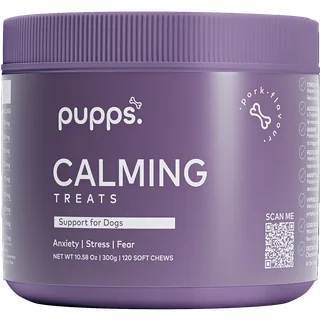
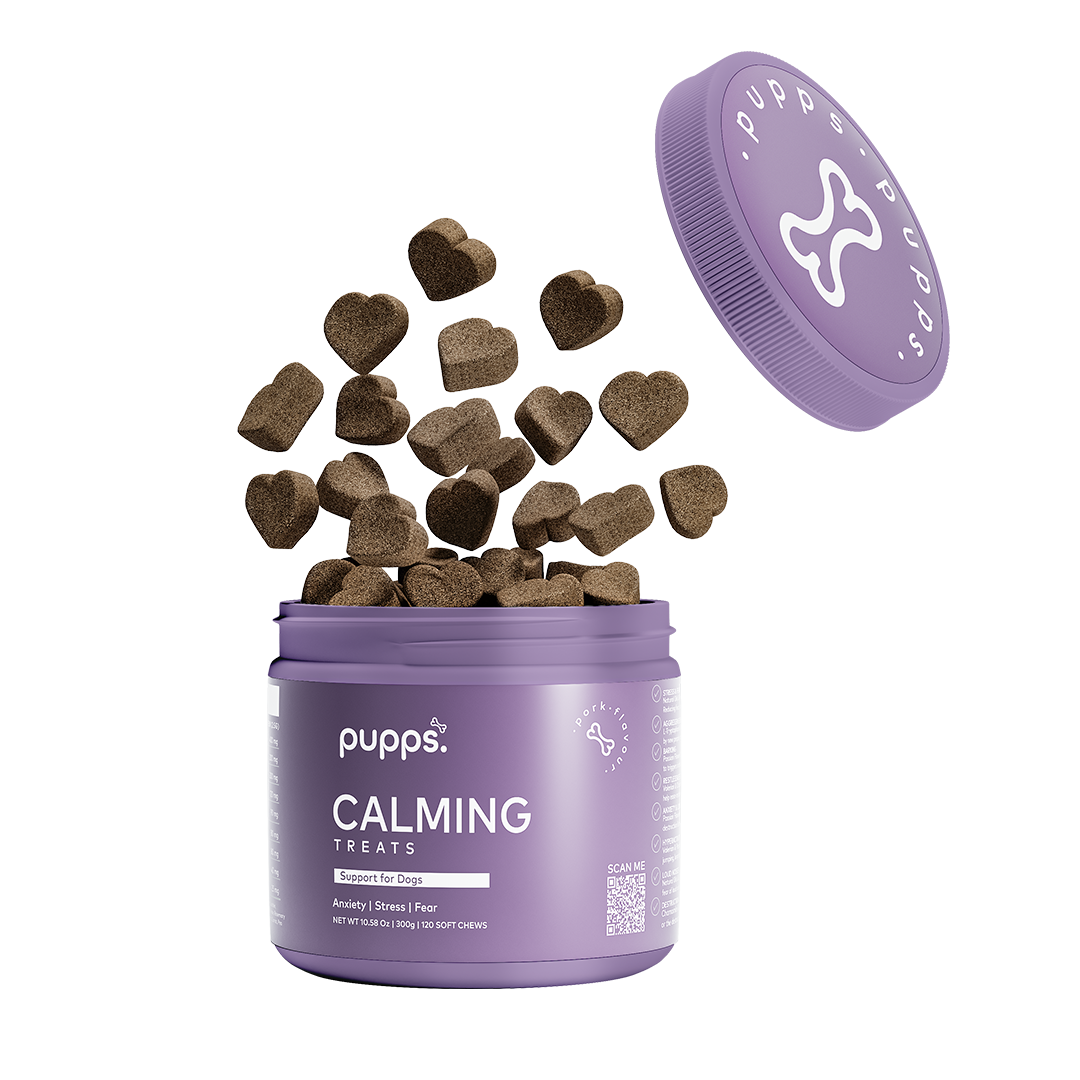
- Calming support: for dogs who are unsettled in the evening, a daily calming supplement can support a calmer routine.
Stiff when they get up?
Pupps Hip & Joint soft chews support stiff joints with glucosamine, MSM, chondroitin and green lipped mussel, so they're back on the stairs. Backed by our Lifetime Money Back Guarantee.
Unsettled in the evenings?
Pupps Calming soft chews support a calmer evening routine with chamomile, valerian and L-theanine. Rated 4.6 on Trustpilot and backed by our Lifetime Money Back Guarantee.
Frequently asked questions
Is it normal for old dogs to be restless at night?
It's common, but it's always worth finding the reason. Stiffness, toilet needs and confusion are the usual causes, and your vet can help rule out anything that needs treatment.
Can I give my older dog joint and calming chews together?
Yes. Read can I give my dog more than one supplement. If your dog already takes something prescribed by your vet, check with them first.
Should I let my senior dog sleep in my room?
If it helps them settle and suits you, many older dogs sleep better close to their people.
For more help, read why is my dog restless at night, best supplements for senior dogs and 7 signs your dog's joints need support.


Leave a comment
This site is protected by hCaptcha and the hCaptcha Privacy Policy and Terms of Service apply.