




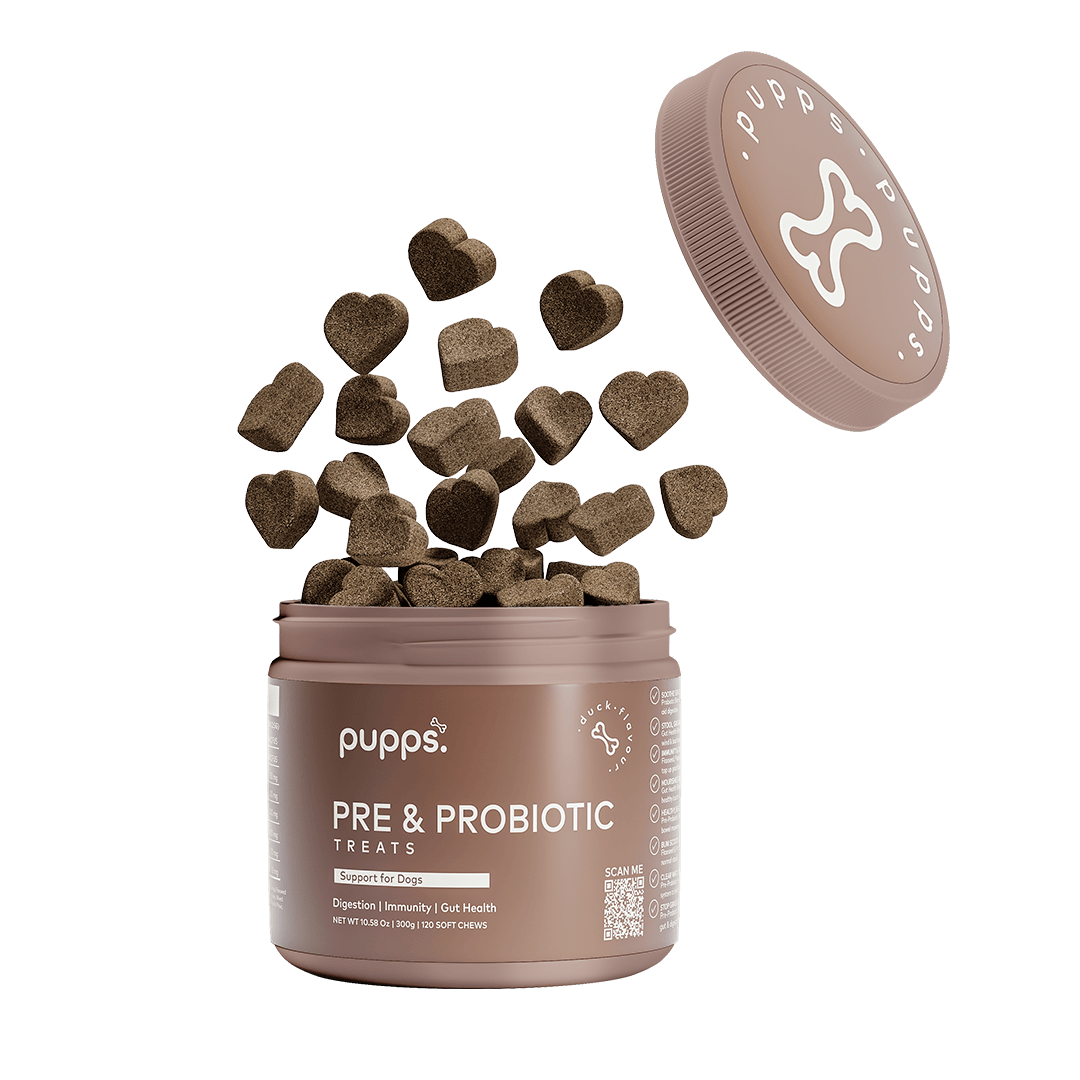
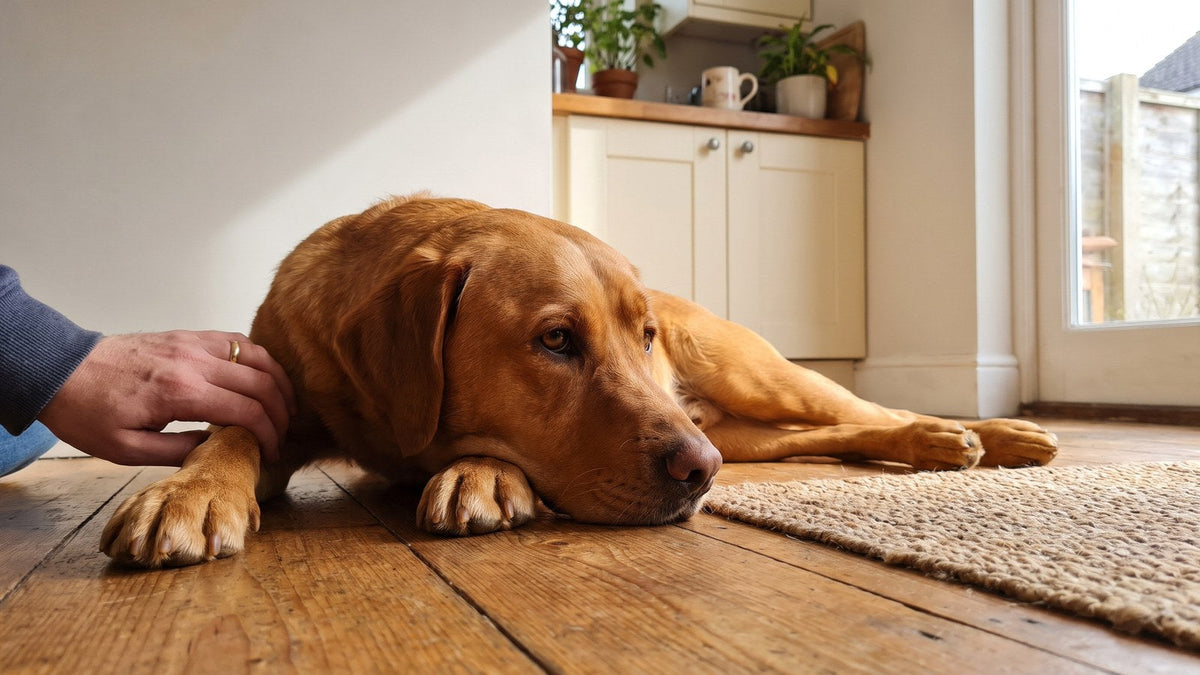
The short answer: most bouts of runny poo in dogs are short and come from a food change, scavenging or stress. Keep fresh water down, offer small plain meals, and call your vet if it lasts more than a day or two or your dog seems unwell. A daily pre and probiotic can help support a settled gut and firmer stools over time, but it is not a fix for an upset that needs a vet.
Runny poo is one of the most common things dog owners worry about, and one of the most common reasons dogs see the vet. Here is what usually causes it, what you can do at home, when to call the vet, and where a probiotic fits in.
Call your vet straight away if
- There is blood in the poo, or it is black and tarry
- Your dog is being sick as well
- They are flat, off their food or seem to be in pain
- It has lasted more than 24 to 48 hours
- They are a puppy, an older dog or have a health condition
- You think they have eaten something they shouldn't, like chocolate, grapes, raisins, a bone or a toy
If you are unsure, ring your vet. It is always better to ask.
Why has my dog got runny poo?
- A sudden food change. Switching food overnight is one of the biggest causes. Change food slowly over 7 to 10 days.
- Scavenging. Bin raids, picnic leftovers, things found on walks.
- Rich food. Fatty scraps, gravy and party food, especially at Christmas.
- Stress. Fireworks, kennels, visitors, travel or a house move can all upset a dog's tummy. Our fireworks guide has tips for the noisy weeks.
- Too many treats or a new chew they are not used to.
- Worms and parasites. Keep worming up to date.
- Something that needs a vet. If runny poo keeps coming back, your vet can look for the cause.
What to do at home for a mild upset
- Keep fresh water down all the time. Dogs lose fluid fast with runny poo.
- Feed smaller meals of their usual food, or a plain meal your vet suggests. Don't stop feeding without your vet's advice, especially for puppies.
- Cut out treats and table scraps until things settle.
- Keep an eye on it. Look at each poo for a day or two. If it isn't getting better, call your vet.
- Change food slowly from now on, mixing in a little more of the new food each day.
Do probiotics help dogs with runny poo?
Probiotics are friendly bacteria. Prebiotics are the fibre that feeds them. Together they help support a balanced gut, which is why many owners give a daily probiotic to dogs with sensitive tummies, dogs who react to food changes, and dogs going through a stressful spell.
A probiotic is not a treatment for diarrhoea and it won't replace your vet if something is wrong. Think of it as daily support for a tummy that tends to wobble, used alongside slow food changes and fewer scraps.
What to look for in a dog probiotic
- Named bacteria and a clear amount. The label should list the strains and how many live bacteria (CFUs) are in each serving.
- Prebiotic fibre too, so the good bacteria have something to feed on.
- Easy to give every day. A probiotic only helps if your dog actually takes it, which matters with fussy eaters.
- Clear amounts by weight, so you know how much to give.
Daily support for sensitive tummies
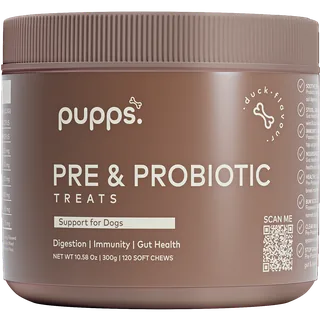
Pupps Pre & Probiotic soft chews have a 5 strain probiotic blend (4.5 billion CFUs) plus Bacillus subtilis, prebiotic fibre, pumpkin and papaya, in a duck flavoured chew dogs actually want to eat. Given every day, they help settle sensitive tummies and firm up stools. Rated 4.6 on Trustpilot and backed by our Lifetime Money Back Guarantee.

How to start a daily probiotic
- Wait until any upset has settled and your dog is otherwise well. If they are on vet treatment, check with your vet first.
- Start with half the amount and build up to the full amount over a week, so their tummy can adjust.
- Give it at the same time every day, for example with breakfast.
- How many Pre & Probiotic chews: up to 4.5kg, 1 chew a day. 5 to 18kg: 2. 18 to 36kg: 3. Over 36kg: 4.
- Give it time. Some owners notice a change quickly, but give it up to 30 days of daily use before you judge.
Why is my dog scooting?
Dragging their bottom along the floor often means the anal glands are full or sore. Firm stools help those glands empty naturally each time your dog goes, so a run of soft or runny poo can play a part. Worms and itchy skin can cause scooting too. If it keeps happening, or your dog seems sore, see your vet.
Upset tummy after Christmas food
December is a busy month for dog tummies. Fatty meat, gravy, stuffing and leftovers can all bring on runny poo. Chocolate, grapes, raisins, mince pies, Christmas pudding, onions and cooked bones are dangerous for dogs: if your dog eats any of these, call your vet straight away. For more on getting through the festive weeks, read a calm Christmas for your dog.
Frequently asked questions
How long does runny poo last in dogs?
A mild upset usually settles within a day or two. If it lasts longer than 48 hours, keeps coming back, or your dog seems unwell, call your vet.
Can I give my dog a probiotic when they have runny poo?
Speak to your vet first if your dog is unwell or on treatment. Many owners start a daily probiotic once things have settled, as ongoing support for a sensitive tummy.
Should I stop feeding my dog if they have diarrhoea?
Not without your vet's advice, and never for puppies. Smaller meals of plain food are usually better than going without.
How long do probiotics take to work in dogs?
Some owners notice a change quickly. Give a daily probiotic up to 30 days before you judge.
Want to go further? Try our 4 week gut reset plan, or read why your dog's gut health matters more than you think.


Leave a comment
This site is protected by hCaptcha and the hCaptcha Privacy Policy and Terms of Service apply.