



Most dogs who eat poo are doing something normal for a dog, not something wrong with them. It usually comes from curiosity, boredom, habit or hunger, and puppies often grow out of it; picking up straight away, keeping your dog on a lead in the garden for a few weeks and giving their brain more to do is what helps most.
It is one of the most common things owners ask about, and one of the most embarrassing to bring up. So here is the plain answer: why dogs do it, when it is worth a call to your vet, and a simple four week plan you can start today.
Why does my dog eat poo?
Dogs explore the world with their nose and mouth. To a dog, poo is full of interesting smells and, often, bits of food that went through only half digested. That is why many dogs go for fresh poo far more than old, and why cat litter trays and horse fields are so tempting.
There is an instinct behind it too. Mother dogs clean up after their puppies to keep the den clean, and some puppies copy that and simply keep doing it.
Is it normal for puppies to eat poo?
Yes, it is very common in puppies. Everything goes in the mouth at that age, and poo is just one more thing to investigate. Most puppies grow out of it as they mature, especially if you clear up quickly so the habit never gets the chance to stick.
What helps most is keeping things calm. If a puppy gets told off for a toilet accident, they can learn that poo means trouble and start tidying the evidence away themselves. Praise them for going in the right place, clean up quietly, and move on.
The common reasons dogs eat poo
- Curiosity. It smells interesting, so they check it out. Young dogs do this most.
- Boredom. A dog with not much to do will find their own entertainment, and the garden floor is right there.
- Habit. Once a dog has done it a few times, it becomes part of their routine, just like checking the same lamppost on every walk.
- Attention. If eating poo gets you running across the garden shouting, some dogs learn it is a great way to start a game.
- Copying. Dogs learn from each other. If one dog in the house does it, the other may pick it up.
- Hunger or rushed meals. Dogs who are on a strict diet, who wolf their food down, or who only eat once a day can be extra keen to scavenge between meals.
When to ask your vet
Most of the time this is a behaviour, not a health problem. But it is worth booking a check with your vet if:
- it starts suddenly in an adult dog who has never done it before
- your dog is losing weight, or seems hungry all the time
- you notice other changes too, such as runny poo, sickness, low energy or drinking much more than usual
- it is not their own poo they are eating, as other animals' poo can carry worms and other bugs
Your vet can rule out anything that needs their help, check your dog's worming is up to date and make sure their diet suits them. If runny poo is part of the picture, our guide to runny poo in dogs explains what helps and when to call.
How to stop my dog eating poo
Telling a dog off rarely works, because it usually happens too late for them to link it with what they did. What works is taking away the chance, and giving them something better to do instead. Here is why each step helps.
- Pick up straight away. No poo left lying around means no chance to practise. Every time a dog does it, the habit gets stronger, so removing the chance is the fastest way to weaken it.
- Use a lead in the garden for a while. Go out with your dog on a lead, let them do their business, then calmly lead them away and reward them. This breaks the routine of toilet, then snack.
- Teach a solid "leave it". Practise with a treat in your closed hand at home, rewarding the moment your dog looks away. Then build up to using it outside. It gives you a calm way to stop them that works anywhere.
- Reward coming back to you. When your dog has been to the toilet, call them over and give a tasty treat. Soon they learn the best thing after a poo is running to you, not eating it.
- Add more to their day. Puzzle feeders, snuffle mats, short training games and new smells on walks use up energy and brainpower, so there is less boredom to fill.
- Keep meals regular. Two or more meals a day at set times, and a slow feeder for fast eaters, help your dog feel fuller for longer, so scavenging is less tempting.
- Block the litter tray. If the cat's tray is the problem, move it somewhere your dog can't reach, or use a covered tray or a baby gate.
A simple four week plan
Habits change with routine, not one big push. This is a plan any owner can follow. Many dogs improve steadily over the four weeks, and some sooner.
- Week 1: take away the chance. Lead in the garden every time, pick up straight away, and keep a note of when it tends to happen (after meals, first thing, when they are left alone). Knowing the pattern shows you when to be ready.
- Week 2: teach the new routine. Start "leave it" at home for a few minutes a day, and reward every time your dog comes back to you after the toilet. You are teaching them what to do, not only what not to do.
- Week 3: fill the gaps. Feed at least one meal from a puzzle feeder or snuffle mat, and add a short sniff walk or training game at the times your note showed were risky. A busy, tired dog has less reason to go looking.
- Week 4: build trust. Try short spells off the lead in the garden while you watch. If your dog heads for a poo, use "leave it" and reward them for turning away. If it slips, go back a week; that is normal.
Keeping the gut steady day to day
Good habits do the heavy lifting here. But a dog whose tummy feels settled is often a more contented dog, and gut health is something you can support every day alongside the training.
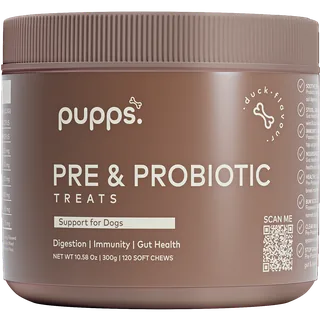
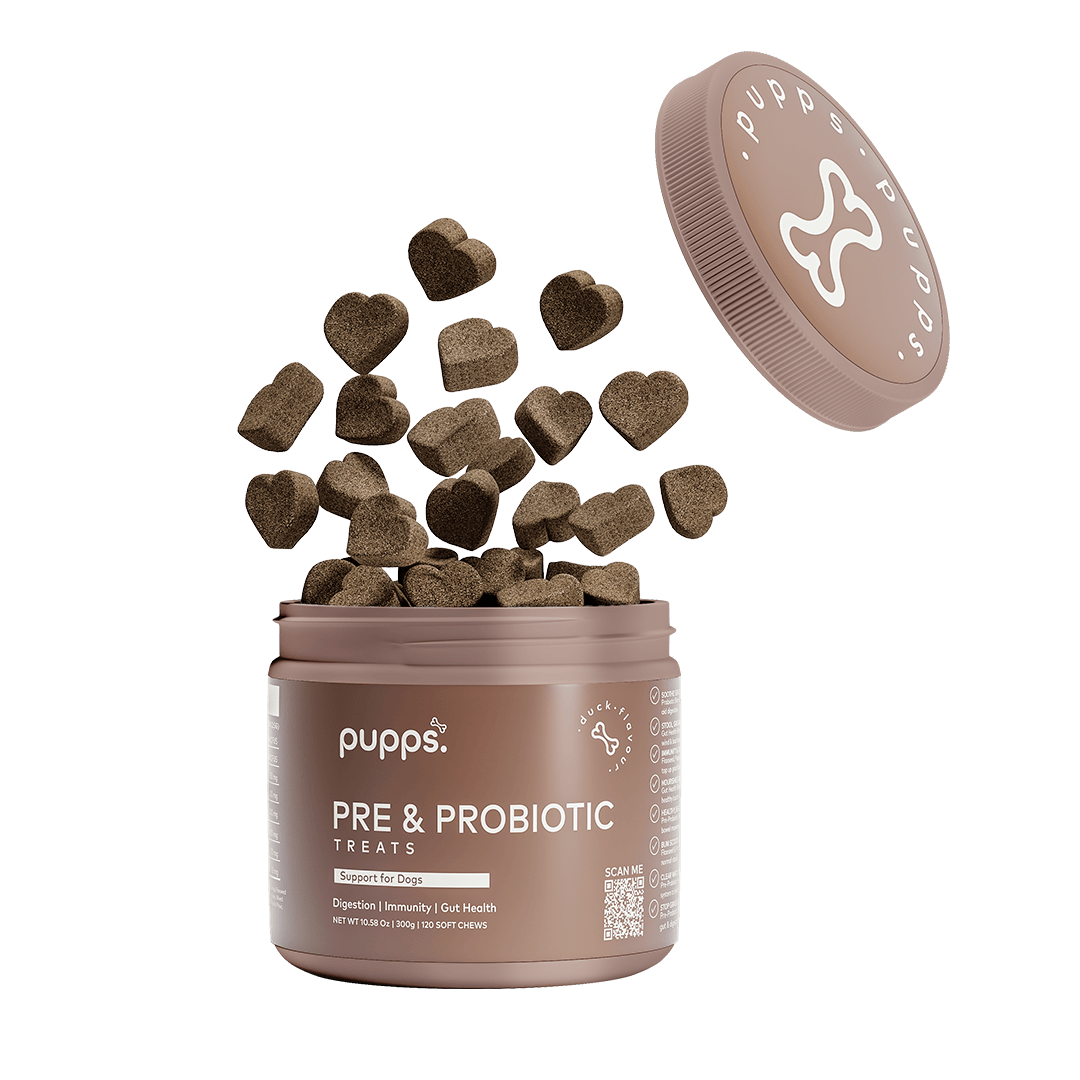
Simple steps help: a complete, good quality food, changes of food made slowly over a week or so, fresh water, and fewer scraps from the table. Some owners also add a daily gut supplement. Pupps Pre & Probiotic are soft chews that help settle sensitive tummies and top up the good bacteria, with a 5 strain probiotic (4.5bn CFU), Bacillus subtilis, pumpkin and papaya. Pair them with the plan above: the training breaks the habit, and the chews give the gut steady support every day. It can take up to 30 days to see a difference, but lots of owners see results much quicker, and every tub comes with our Lifetime Money Back Guarantee.
Want to know more about how the gut works? Read our dog gut health guide. And if your dog also loves a mouthful of grass, see why dogs eat grass.
Frequently asked questions
Why does my dog eat other dogs' poo?
Usually for the same reasons as their own: curiosity, the smell, and leftover food in it. Other dogs' poo can carry worms and other bugs, so keep your dog on a lead where there is a lot of it, use "leave it" on walks, and keep their worming up to date.
Will my puppy grow out of eating poo?
Most do, especially when you clear up straight away and avoid telling them off for accidents. If it is still going on past about a year old, follow the four week plan above and mention it at your next vet check.
Why does my dog eat cat poo?
Cat food is rich in protein and fat, and cat poo still smells of it, so many dogs find it hard to resist. Moving the litter tray out of reach is the simplest fix, and it keeps the cat happier too.


Leave a comment
This site is protected by hCaptcha and the hCaptcha Privacy Policy and Terms of Service apply.